If not for this three-minute commentary on National Public Radio’s Morning Edition on Oct. 20, 2005, the book shown here would not exist. While my commentary aired, Randi Murray, a literary agent in San Francisco, listened in her driveway. She told me that when she finished crying, she dashed into her house, looked me up on the internet and sent me an email, which said in essence, “There’s a book in that commentary if you’re interested, and I’d like to represent you.” I spoke with Randi after returning from Italy with my family after the canonization. She coached me through the process of producing a 50-page book proposal over the next few months. And in March 2006, she negotiated a contract for me with a division of HarperCollins. When I look back on all that — how it started and what it produced — I’m left with only one reasonable explanation: It was a miracle.
Bryan Toney, left, associate vice chancellor for economic development at UNCG, and Justin Streuli, director of the N.C. Entrepreneurship Center at UNCG, stand in front of the house that will be renovated for ThinkHouseU. Photo by Julie Knight
Entrepreneurial support is poised to expand once again in Greensboro while taking a step closer to a nationally recognized entrepreneurial haven – the Triangle.
Starting in August 2015, UNC Greensboro will serve as a national pilot for a residential concept called ThinkHouseU. In a renovated house in the Glenwood neighborhood near campus, eight imaginative and determined undergrads with viable visions of new business startups will live together for nine months. They will not only share kitchen space and bathrooms, but swap ideas and encouragement as well.
Chris Gergen, a leader in the Triangle in entrepreneurial support, is behind the effort in Greensboro.
My monthly Triad Next column is here at Medium.com and describes the program. My radio story with Keri Brown at WFDD is at this link.
Technically, this Q&A for the famous fashion magazine (website) Elle.com is not a travel story. But my subject and I certainly had to travel a long way to meet up and talk in Rome, Italy.
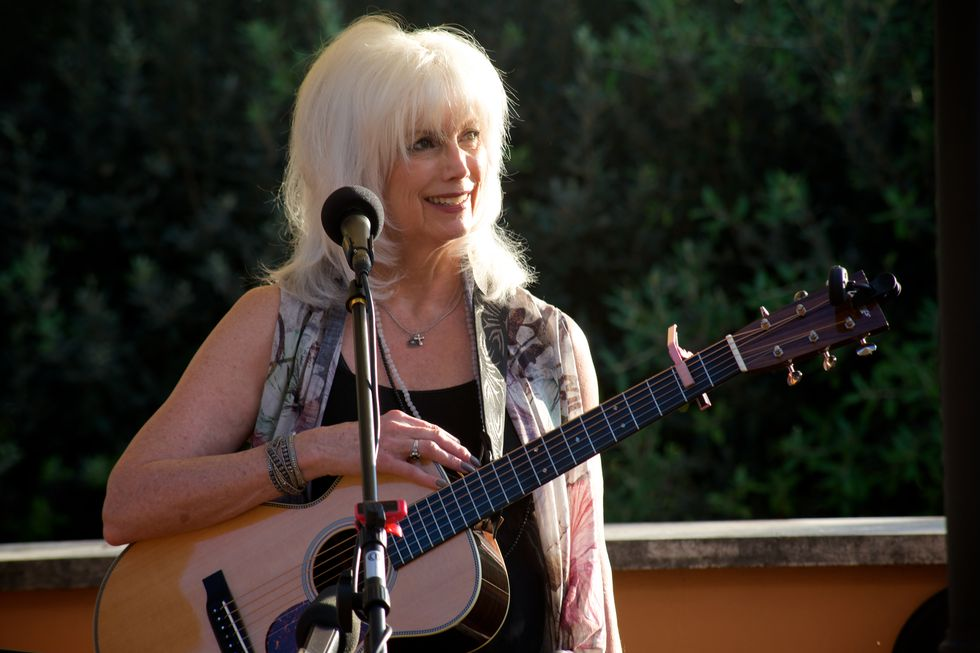
Emmylou Harris, the iconic queen of country music, had traveled from her home in Nashville to see how she could do her part to alleviate the worst humanitarian crisis in decades; I had traveled from my home in Greensboro, N.C., to lead a summer session in foreign affairs reporting for a dozen amazing aspiring journalists, all women, from Wake ForestUniversity.
It all came about because my good friend in Rome, Jill Drzewiecki with the Jesuit Refugee Service, had organized Emmylou’s visit as a potential fundraiser to help the wave after wave of immigrants flooding Europe in the summer of 2016, especially Italy. Jill asked if I would interview Emmylou and write a story. Yes, please, was my immediate response. Another friend at Elle, features editor Laura Abraham, opened the door to this story. I wrote two others, including one for Mongabay!
“I’m just a tiny part, a tiny drop,” she told me of her fundraising through music idea that was just forming. “But who knows what we can accomplish. I mean, how can you see so much pain and suffering and think that it’s normal? It’s not normal. But you have to have hope. You have to believe. You have to feel like you can make a difference.”
Emmylou and I talked for about an hour on the streets of Rome as the group she was with was touring a part of the city frequented by immigrants and never tourists. She was warm, candid and easy to talk with. That evening, I was invited to a rooftop concert by Emmylou at the home of the U.S. Ambassador for the UN Agencies. Me, a few other friends and about 50 priests. What a night. What a fabulous human being.
Emmylou Harris performing at the residence of David Lane, the U.S. ambassador to UN Agencies. JRS/JACQUELYN PAVILON
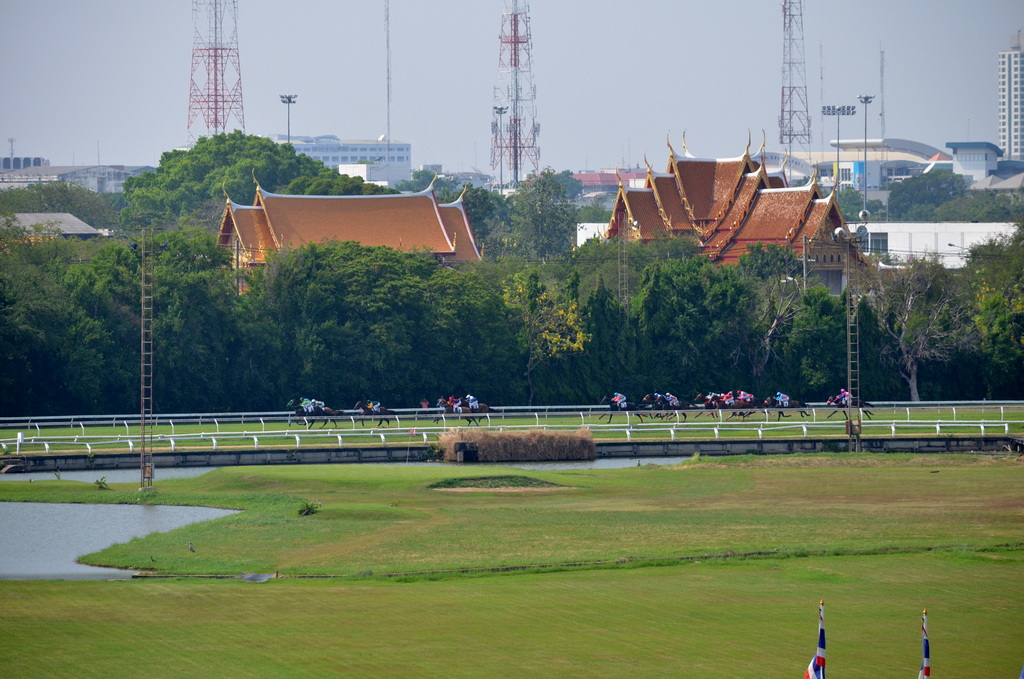
On a Sunday afternoon, an American traveller discovers a favourite Thai pastime: racing horses at the Royal Turf Club — Four Seasons Magazine.
My wife and I visited our daughter Emilia in Thailand in March 2013 when she was there as an elementary school teacher. During our first weekend there, she and her friend Ian showed us a side of Bangkok beyond Buddhas, tuk-tuks and Khao San Road. They took us to one of the city’s two race tracks. It was an incredible experience, and Four Seasons Magazine bought the story. The story can be read here.
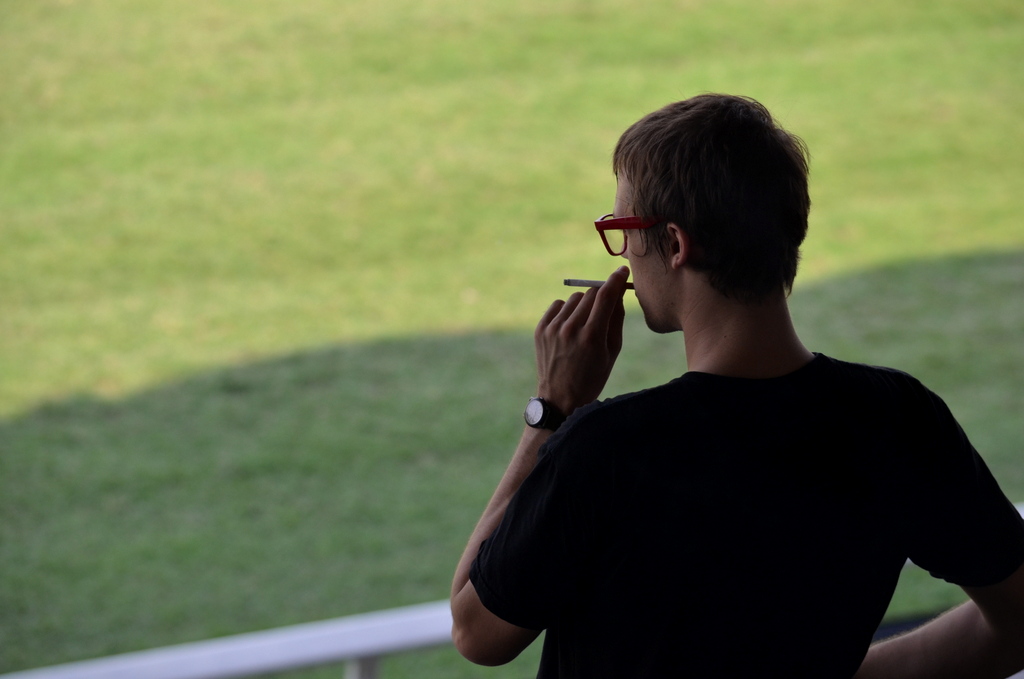
Ian, channeling Bukowski, on the rail studying the odds before the next race.
Excerpt: Ian goes to the rail to study the horses. He’s channeling Bukowski with a smoke in one hand, a whiskey in the other. I hang behind him, taking in the scene. The lush grass track is bordered by a row of blooming rose bushes. The infield has ponds, palm trees and a par-3 golf course. The jockeys in their colourful silks look young enough to be my daughter’s middle school students. And, as if to emphasize that we’re a long way from Churchill Downs, the peaked rooflines of the lavish Marble Temple shimmer in red just beyond the first turn.
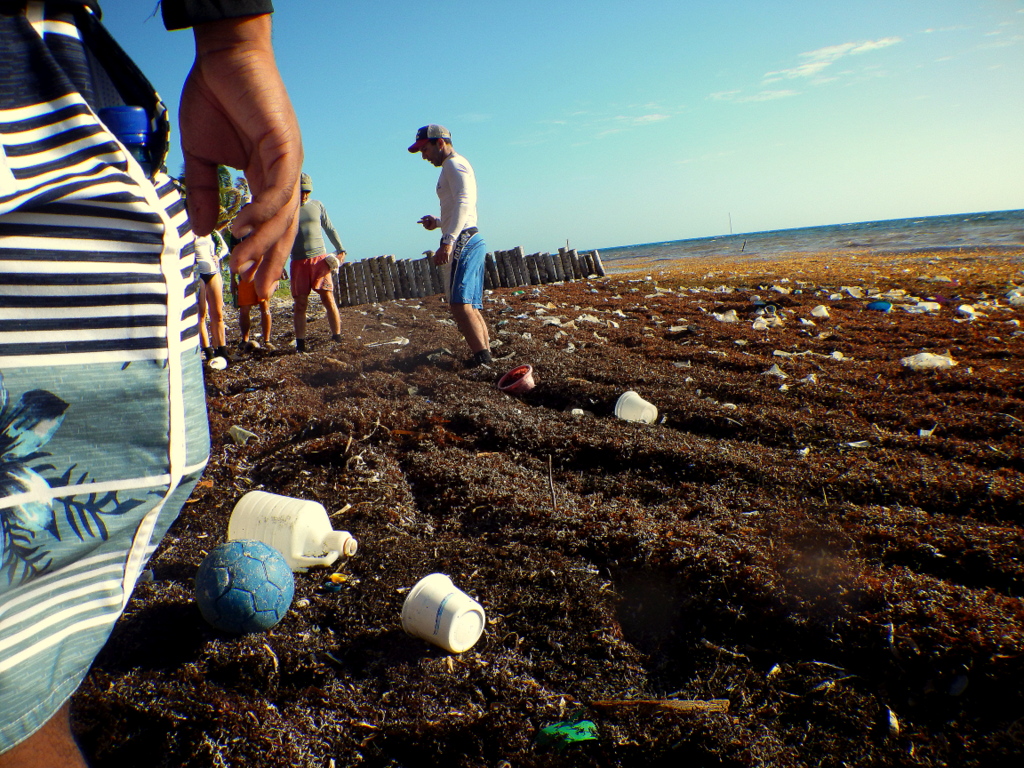
Wake Forest ecology student learn first hand the perils of plastic on Long Caye. Photo by Justin Catanoso
During the week of March 7, 2015 — Spring Break — my wife and I traveled with a group of Wake Forest University students and faculty in a coral ecology class. Arriving in Belize City late morning, we all boarded a boat called the Great White and piloted 47 miles into the Caribbean to Lighthouse Reef Atoll, a remote and mostly untouched set of six islands on the world’s second-largest coral reef. We set up home for the week on Long Caye (2.5 miles long; 0.9 milewide) and the Itza Lodge, a fabulous, rustic eco-lodge used mostly by university groups and some intrepid tourists.
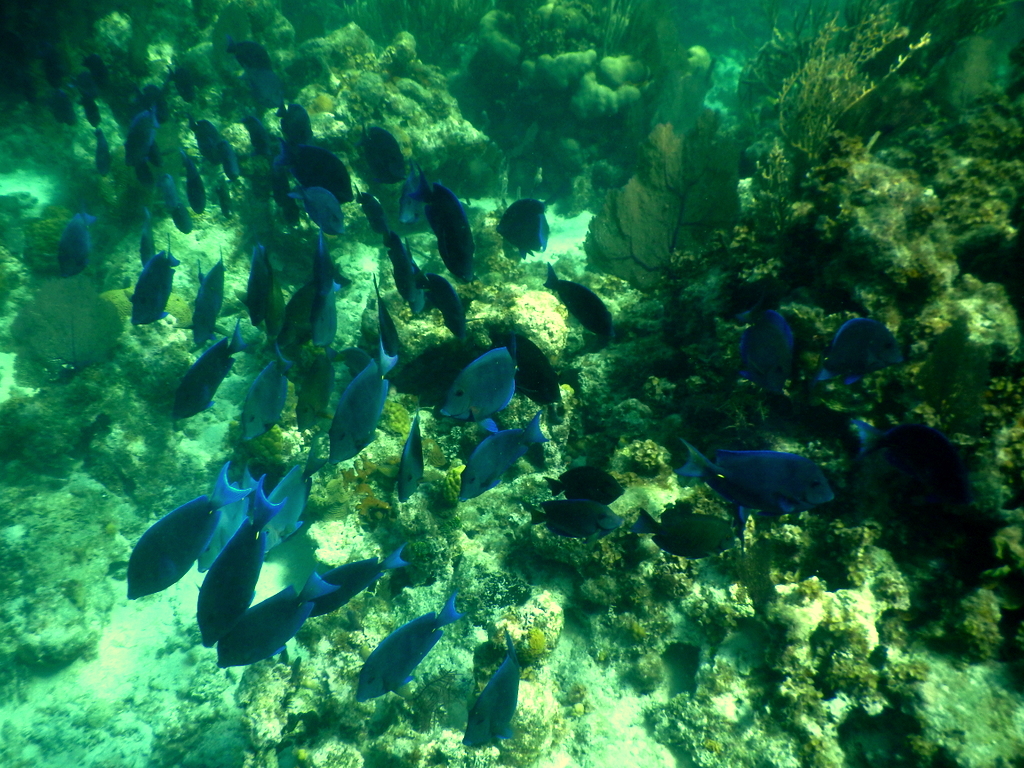
The beauty of the coral reef on Lighthouse Reef Atoll is unsurpassed. Photo by Justin Catanoso
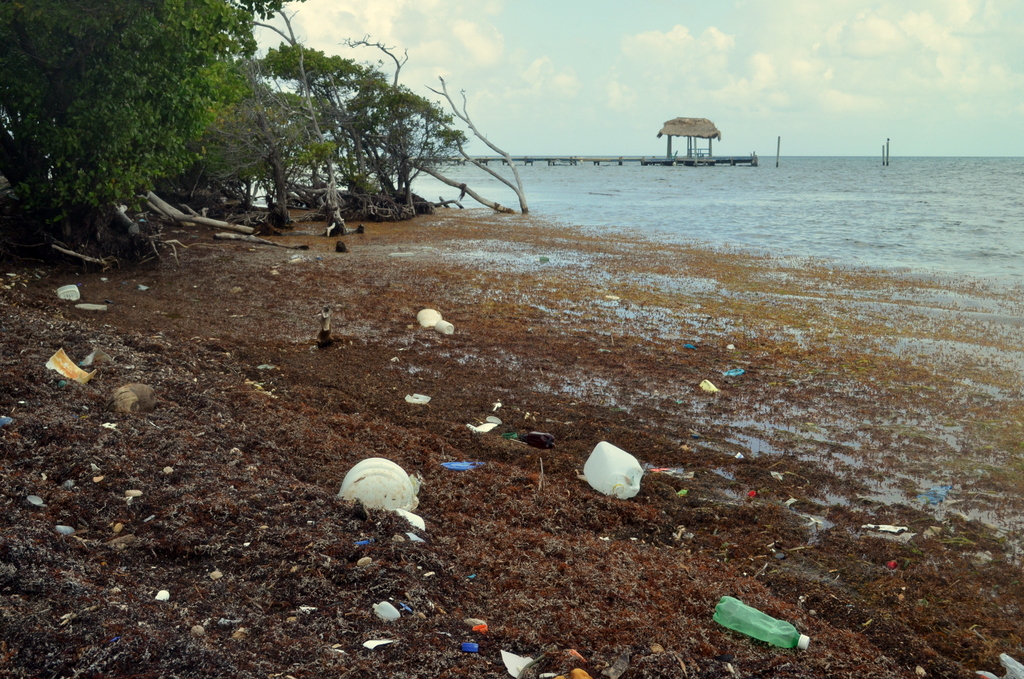
My goal journalistically was to return with a story tied to the underwater marvels we saw while snorkeling daily in the clear turquoise water in the Atoll — including the famous Great Blue Hole. Instead, I came back with a heartbreaking story about our voluminous, reckless use-and-disposal of all manners of plastics, and how it is marring a place as beautiful, pristine and remote as Long Caye.
My radio commentary for March 27, 2015 was based on my Spring Break trip to Lighthouse Reef Atoll and Long Caye, which is located 47 miles off the coast of Belize in the Caribbean. In such a tiny, remote and pristine place, I was stunned by the sight of so much plastic waste. I wrestled with how to localize this international problem for my Triad Business Journal column. Fortunately, Will Scott, the Yadkin Riverkeeper, offered exactly what I needed to hear. The radio report with Keri Brown is here.
Excerpt: “I think the first thing is understanding that when it comes to the environment, our actions here have an impact just about everywhere else. That’s when you realize that how you answer the question ‘paper or plastic’ can make a difference. So can buying a Brita filter instead of a case of bottled water.”
I had the good fortune of covering Targacept, a pioneering drug-discovery company that spun out of R&D at R.J. Reynolds Tobacco Co., since its founding in 2000. Don deBethizy, the first CEO, placed a good bit of trust in me as a journalist with the Business Journal and allowed me extraordinary access to his strategic thinking and his top scientists.
Targacept promised to revolutionize the treatment of mankind’s most vexing neurological disorders by harnessing the most advantageous properties of nicotine. It was an audacious plan that attracted hundreds of millions of dollars in investment of venture capitalists, public markets and individual investors. It was also, after 15 years, more than 20 drug trials and $300 million spent, a complete and utter failure.
My February 2015 column in the Triad Business Journal is an obituary of sorts for the company and the pharmacological concept that eluded it. At this link, you will find a Q&A I conducted with Targacept’s second and final CEO, Stephen Hill. Finally, here is a link to my WFDD radio report on the failure of Targacept.
TRIAD NEXT: My January 2015 column in the Triad Business Journal is a Q&A with Will Scott, the new Yadkin Riverkeeper. The 7,000-square-mile river basis, which provides drinking water for some 700,000 residents, is in good hands. The story is at this link.
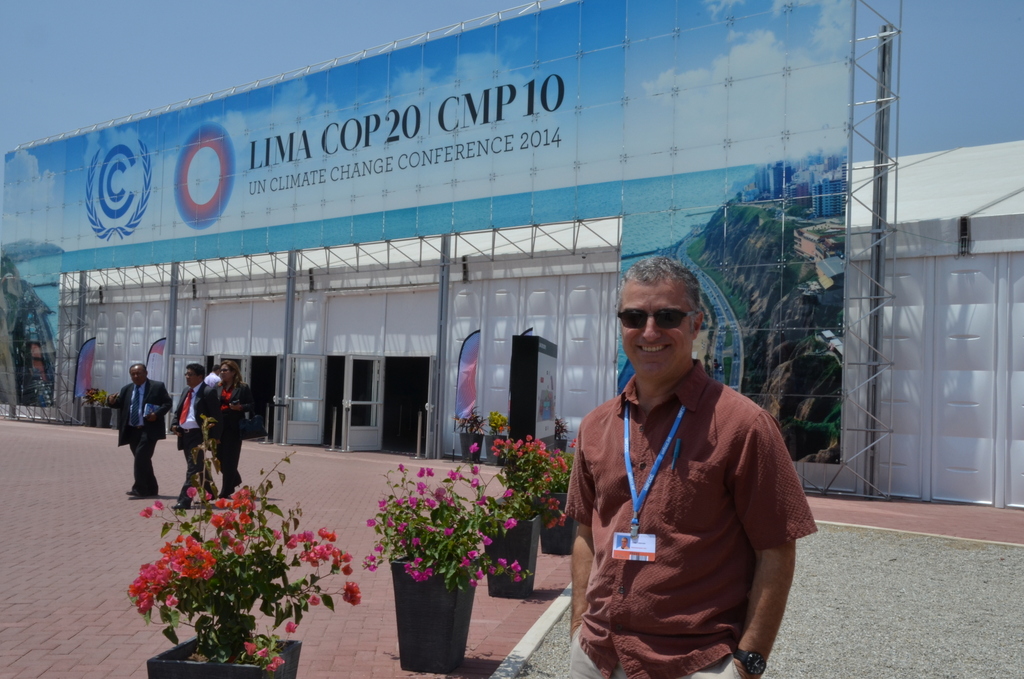
TRIAD NEXT: On Saturday, Dec. 6, my first evening in Lima, Peru, for the UN climate summit, I had the good fortune of meeting Riley M. Duren, a chief systems engineer with NASA’s Jet Propulsion Laboratory in Pasadena, Calif. For an hour or so in the lounge of the Lima Westin, after a long day of presentations at the Global Landscape Forum, Riley talked to me about an issue I had never really thought of before: the role of cities and mayors in the climate change equation.
He was so thoughtful and passionate on this topic that I set aside my Bloody Mary, grabbed my notebook and turned a casual conversation into an interview. I knew I had a column to write for the Triad Business Journal when I returned to the states. And within a few minutes, I knew our conversation would form the basis for my column, linked here at Medium.com
In my final radio report on the UN climate summit in Lima, Peru, I spoke with WFDD’s Keri Brown about some basics: why we have global warming, the extraordinary role forests play worldwide as a sponge for greenhouse gas emissions, and the notion that mayors might be more effective than heads of state in fighting climate change. The audio story is here.
Excerpt: “This was probably the most surprising thing I learned in Lima. I was talking with a climate scientist from NASA and he told me that the world’s 50 largest cities account for about 70 percent of all greenhouse gas emissions. If you think about cities like Beijing, Mumbai, Bangkok, Rio de Janeiro or Los Angeles – big, smoggy places with a lot of traffic and a huge demand for energy – it makes sense.”

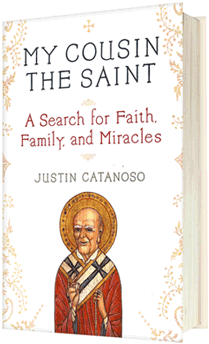 If not for this three-minute commentary on National Public Radio’s Morning Edition on Oct. 20, 2005, the book shown here would not exist. While my commentary aired, Randi Murray, a literary agent in San Francisco, listened in her driveway. She told me that when she finished crying, she dashed into her house, looked me up on the internet and sent me an email, which said in essence, “There’s a book in that commentary if you’re interested, and I’d like to represent you.” I spoke with Randi after returning from Italy with my family after the canonization. She coached me through the process of producing a 50-page book proposal over the next few months. And in March 2006, she negotiated a contract for me with a division of HarperCollins. When I look back on all that — how it started and what it produced — I’m left with only one reasonable explanation: It was a miracle.