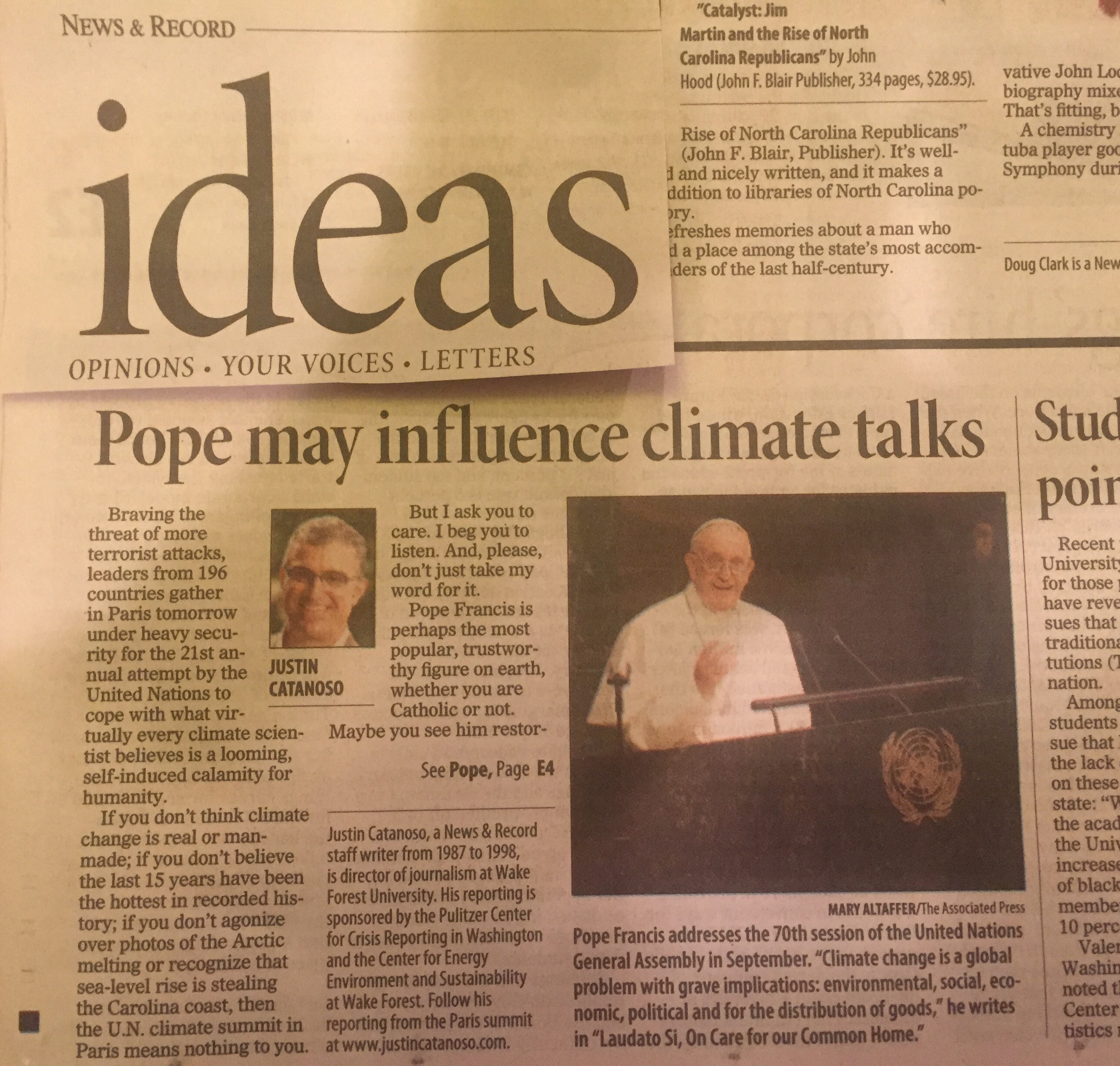
I was a staff writer for the News & Record of Greensboro from April 1987 to April 1998 — 11 years. When I decided to take the job as executive editor of a new weekly newspaper in town, The Business Journal, I was asked to leave the paper immediately, even though I was prepared to give at least four weeks notice. Today, Nov. 29, 2015, I have my first byline in my old daily newspaper in 17 years. It’s a commentary on the UN climate summit in Paris, France, which I will cover for mongabay.com.
Author Archives: Justin Catanoso
Mongabay.com: Catholic bishops ask for binding, transformative COP21 climate treaty
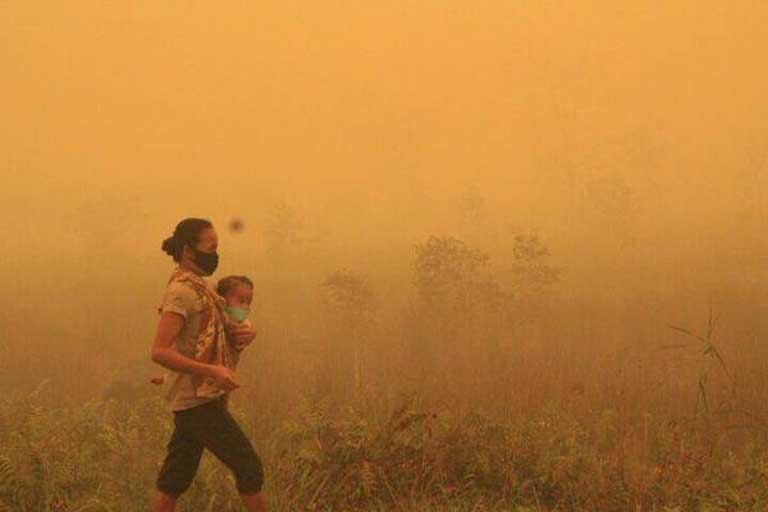
Indonesia on fire, October 16, 2015. An image posted on Twitter purporting to show the smoke-choked city of Palangkaraya. Damages from the record wildfires has already topped US $30 billion; acrid smoke has sickened half a million people. “This is my urgent call… Guarantee the future of Oceania. Change society to a low-carbon lifestyle,” said Monsignor John Ribat, President of the Federation of Catholic Bishops’ Conferences of Oceania and the Archbishop of Port Moresby, Papua New Guinea.
Glenn Scherer, my talented editor at mongabay.com found this photo to run with a breaking news story I wrote for the web site on Oct. 27, 2015. Jim Yardley, my friend and New York Times bureau chief in Rome, let me know about an important Vatican press conference that would be streamed live on Oct. 26 and that I should “cover” from my office at Wake Forest. Amazingly, I did. I split my screen with the Vatican’s YouTube channel on one half, and a Word doc for notes on the other. As Glenn’s cutline points out, the bishops call for a binding, transformative agreement at COP21 in Paris in December is critical. I made my 6 p.m. deadline, Gleen edited it expertly and filled it in with amazing photos. The story is here.
On Nov. 5, 2015, my 56th birthday, I received this gift from the United Nation’s Council on Climate Change (UNFCCC):
“You have been successfully registered for the UNFCCC session Twentyfirst Session of the Conference of the Parties (COP21) and the eleventh Session of the Conference of the Parties serving as the meeting of the Parties to the Kyoto Protocol (CMP11).”
Mongabay.com: Papal encyclical draws harsh critique from Peru’s private sector

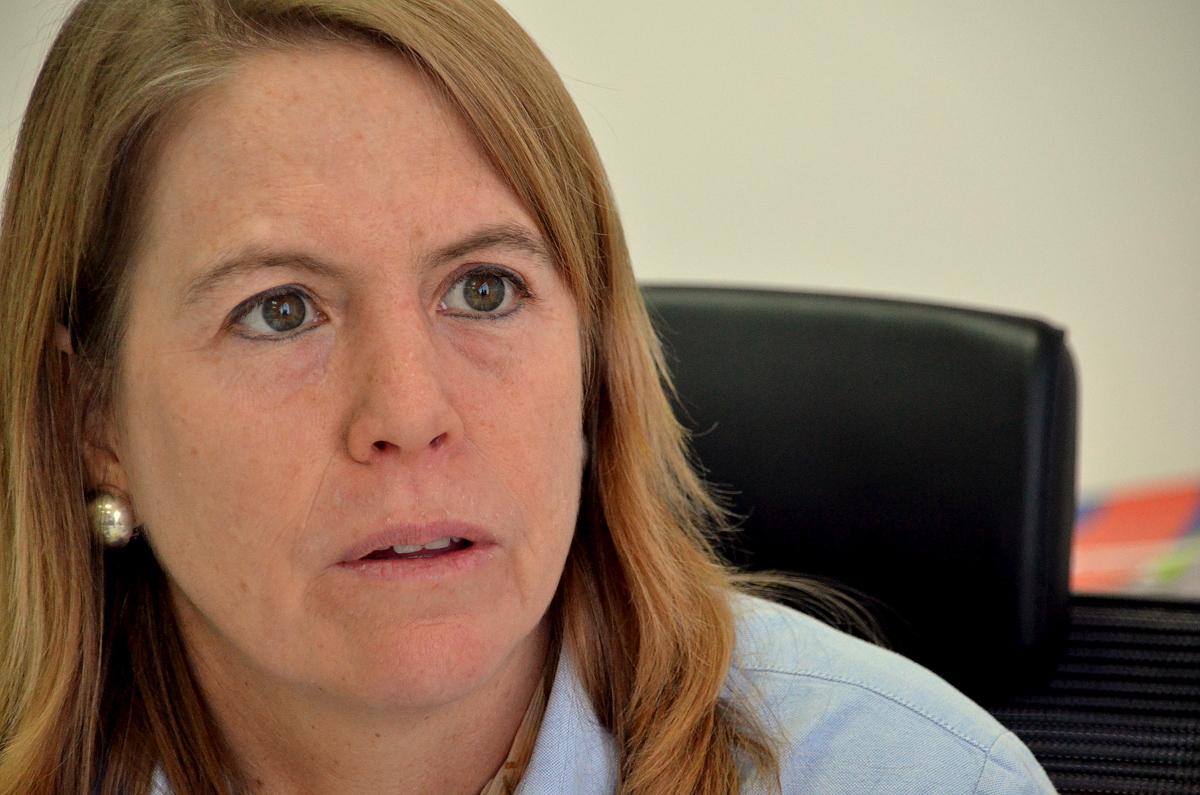
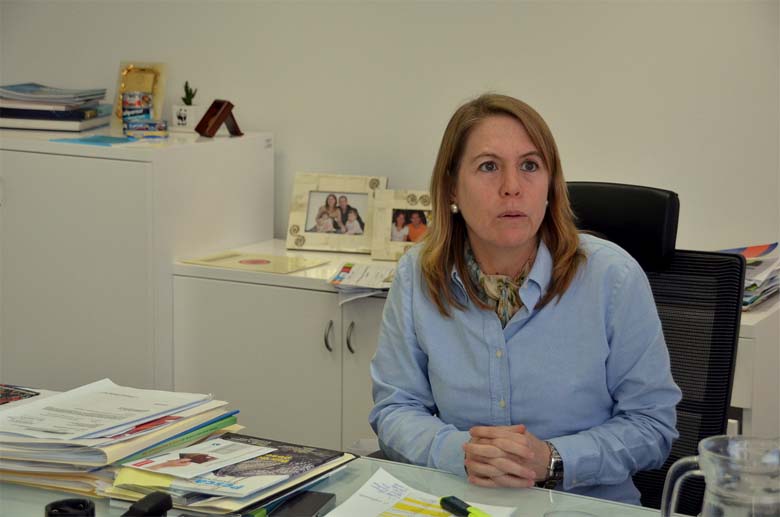
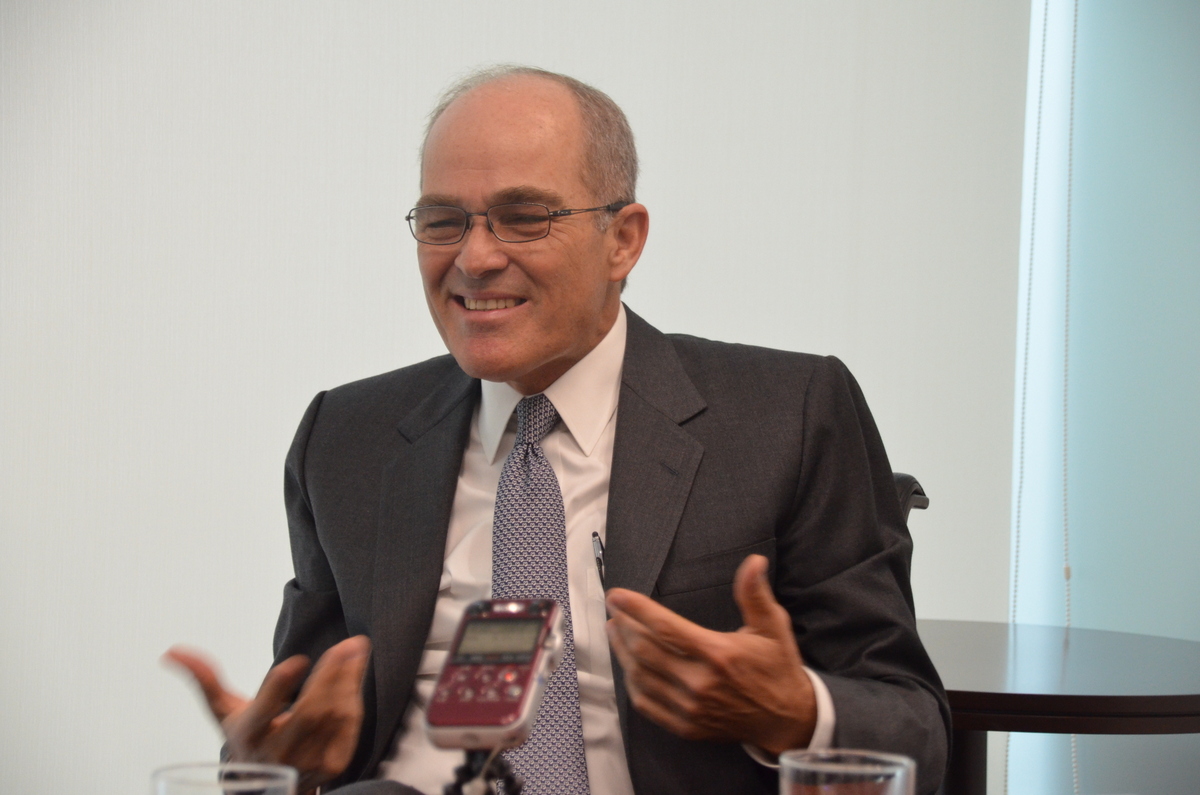
Elena Conterno, who heads Peru’s fisheries group, is a fierce critic of the papal encyclical. Photo by Emilia Catano
He may be beloved in his home region of Latin America. He may enjoy 82 percent approval ratings in Peru, where three out of four people are Catholic. But Pope Francis has some fierce critics. And Elena Conterno is one of them. As Glenn Scherer summed up at mongabay.com:
- Peru’s commercial fishing industry is sustainable, productive and well regulated, says Elena Conterno, but the illegal “artisanal” fleet of the poor is “growing too fast and unsustainable.”
- “Why blame business?” Conterno asks of the Pope’s encyclical, when “the public sector is really lagging,” failing to regulate the environment and the climate, and provide for the poor.
- “Who are the ones doing the most illegal activities? It’s the poor. Not the big companies,” she says. The Pope’s encyclical “is more than naïve. It lacks institutional analysis.”
A tense, compelling interview, start to finish with a the head of the Peru’s fishing industry,
Mongabay.com: Pope’s encyclical draws support from Peru’s #1 environmental official

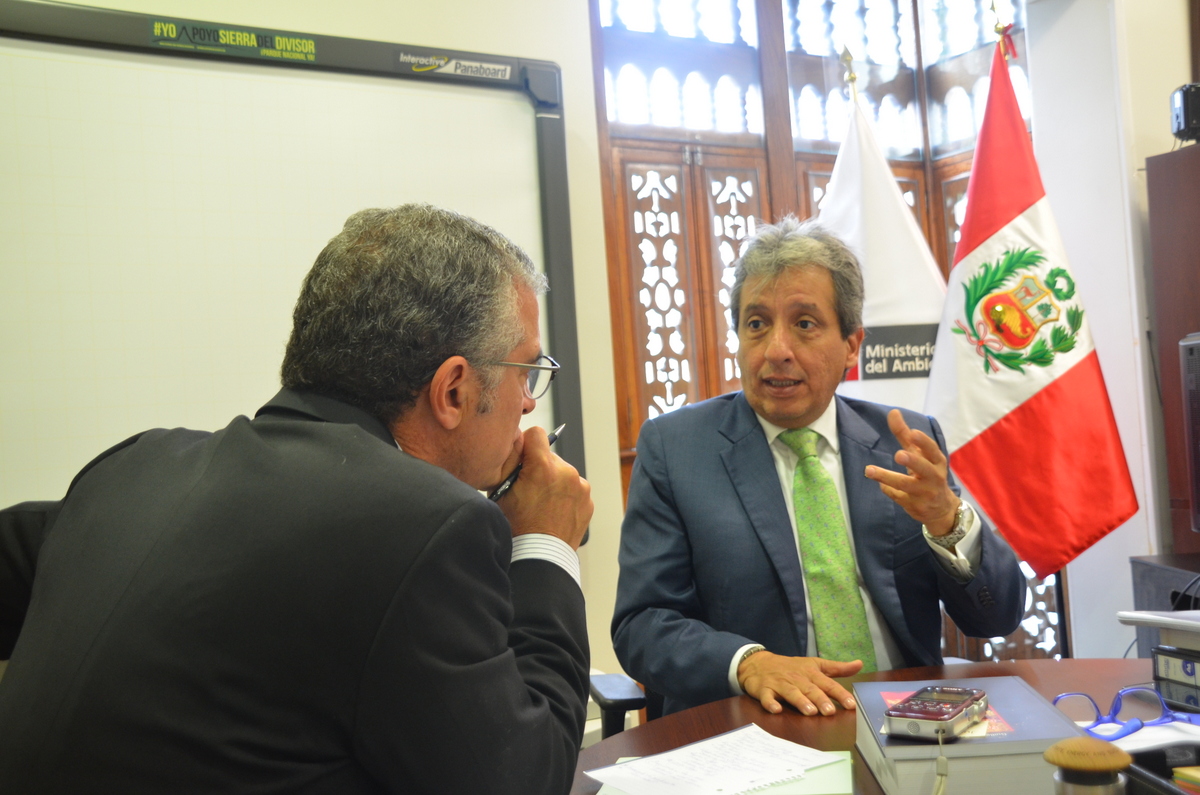
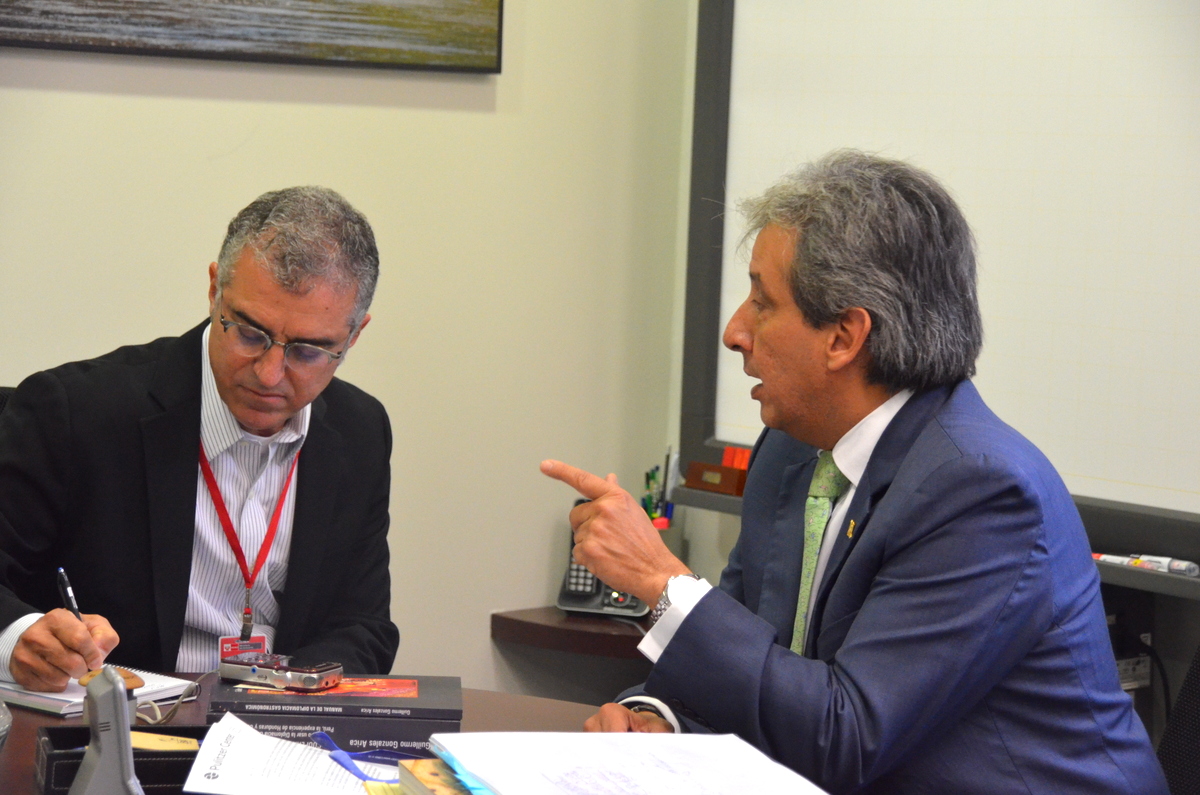
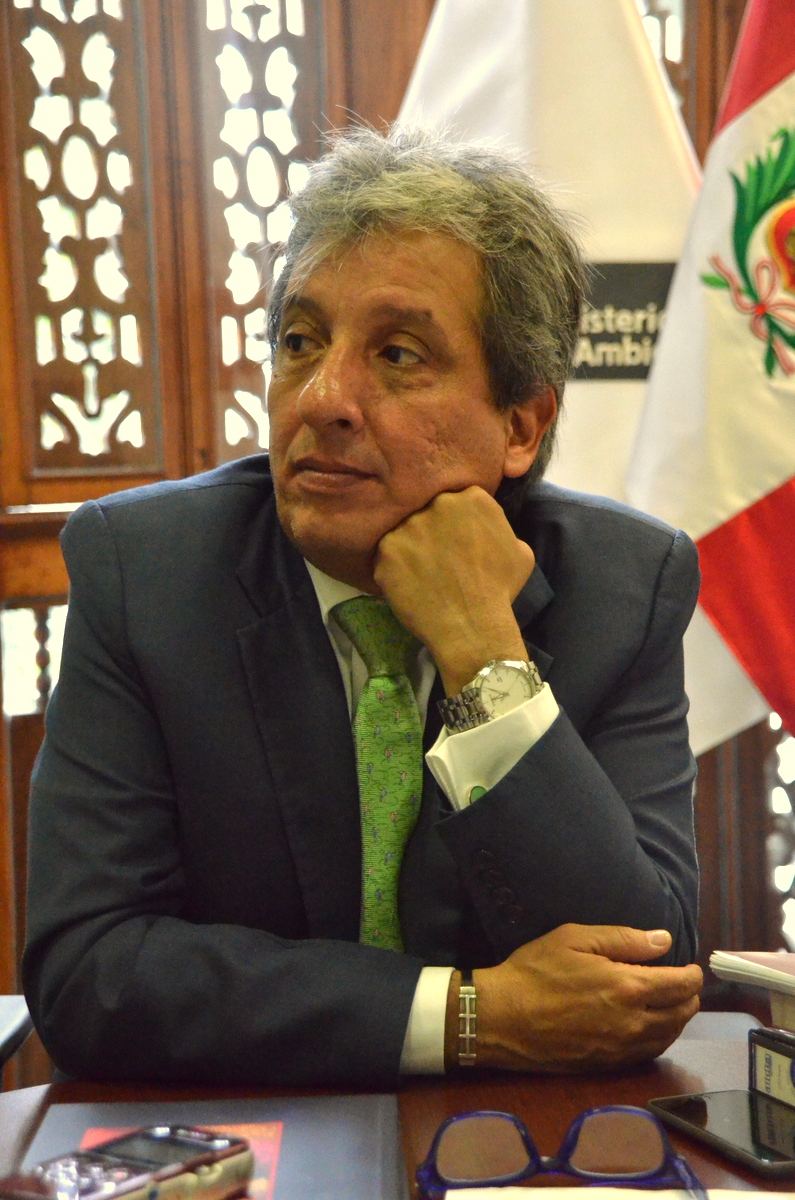
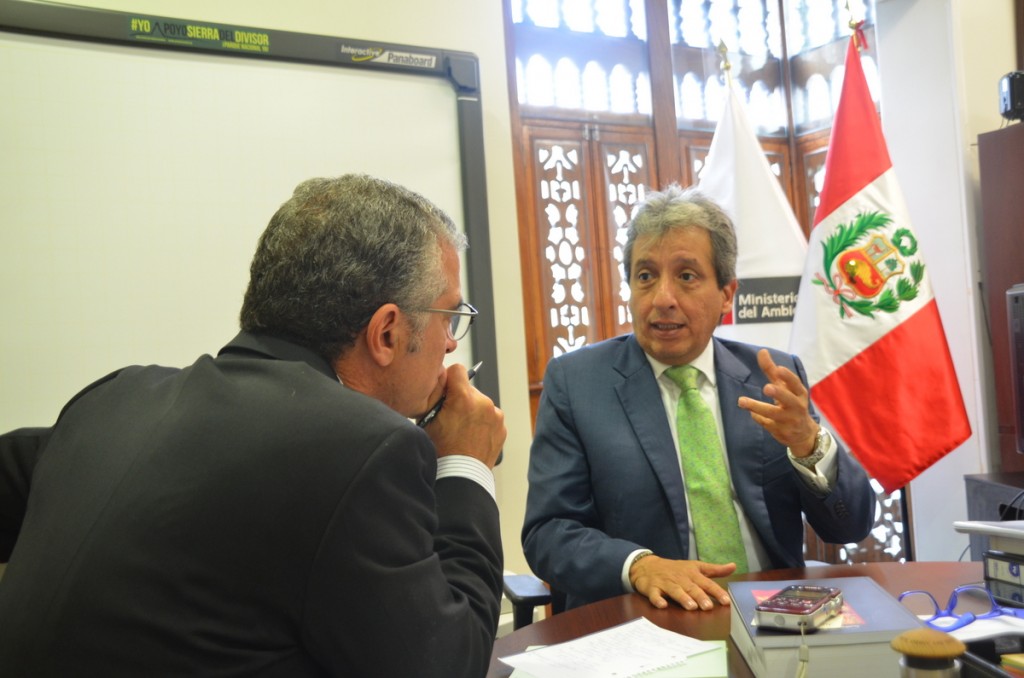
Manuel Pulgar-Vidal is Peru’s minister of the environment, and among the most most influential climate change policy makers. Photo by Emilia Catanoso
I remember Manuel Pulgar-Vidal well from the UN Climate Summit in Lima in December 2014. He was seemingly everywhere, certainly at every press conference. He was friendly and accessible. I was offered to interview him the day COP20 opened, but declined; I could not get to Lima so soon.
In mid-July, 2015, through the high-level connections of Enrique Ortiz, my fixer and interpreter for two weeks in Puru, I got an hour with the minister. He had studied he encyclical and had a lot to say about it. He was less keen on discussing the Tia Maria copper mine in southern Peru. It was a great interview, linked here, and I’m glad mangabay.com chose to run this and two others.
Mongabay Edior Glenn Scherer’s summary:
Mongabay.com: Pope and Peru’s top mining CEO agree and at odds on environment

Roque Benavides, CEO of BuenaVentura, Peru’s largest precious metals mining company. Photo by Emilia Catanoso

Through the good fortune of meeting TV producer Luis Moray in Lima, I was able to spend the last morning of my reporting during my first of two trips to Peru last summer interviewing one of the country’s most influential businessmen — Roque Benavides, CEO of BueanaVentura Mining. He read the encyclical before our interview so he would be prepared. Mongabay.com, with expert editing by Glenn Scherer, published a series of three of my Q&A stories during the week of Pope Francis’ history visit to the United States in late September 2015. My first Q&A is here.
Glenn Scherer wrote as an intro to my interview:
- Roque Benavides makes no apologies for Peru’s extraction industry, noting that it employs tens of thousands, and gives much back to the communities in which it works.
- The CEO fears that the Pope’s encyclical is overly simplistic, putting too much of the blame for the environmental crisis on industry and business.
- He argues forcefully that government has failed in its role as environmental protector, and that the poor are more destructive to the environment than industry.
Emilia Catanoso took a series of amazing photographs. Her best of the entire two-week experience.
WGHP Fox 8: Catanoso commentary on Pope Francis’ historic address to Congress
For the second time in four days, I was invited on to the top-rated news program in the Triad to discuss history — the fist-ever address to a Joint Session of Congress by a pope. This one was extraordinary. My commentary with Neil McNeill is here.
In his 40-minute address, Pope Francis demonstrated first and foremost his admiration not only for the United States (“land of the free, home of the brave,”) but also of America’s great promise as a land of hope and dreams. He delivered his speech in English with grace and humility by making every aggressive point he intended on immigration, climate change, the death penalty, financial reform, marriage, terrorism and respect for the poor. It was brilliant.
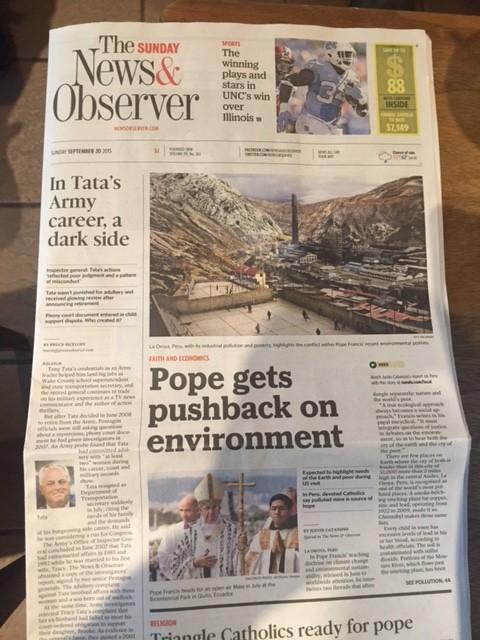
Sunday News & Observer: Pope gets pushback on environment

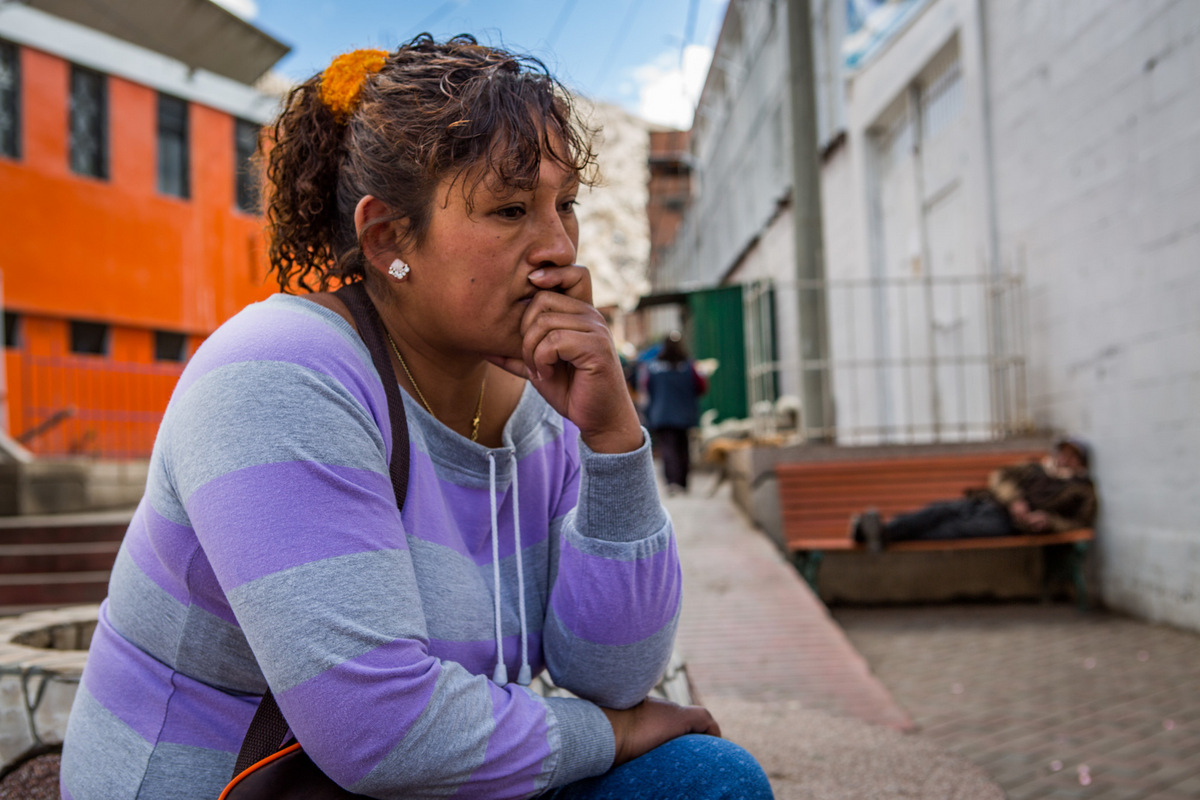
Emel Salazar in La Oroya, Peru: “The life of the plant is more important than anything the pope says.” Photo by Jason Houston
Every Pulitzer Center journalist must ensure that his or her work will be published or broadcast before a grant is considered. That’s the model. They pay expenses so that your work can fill the gaps of news organizations that want foreign reporting, but no longer have staff abroad. When my Pulitzer turn came around around again last spring, I called an editor I’ve long admired but never had the opportunity to work for: John Drescher of the New & Observer in Raleigh, N.C. After explaining my project, he readily agreed to take one of my stories. I was thrilled.
So on Sept. 20, 2015, I had my first page 1 story in a Sunday daily newspaper since I left the News & Record in Greensboro in May 1998. That’s a long time before Sunday fronts, but given that the N&O practically cleared page 1 for me and published all 1,900 words I wrote, plus several photos, it was worth the wait. It’s funny, but in buying papers in Chapel Hill, I felt the same thrill I did when I was a kid, seeing my first byline in print.
WFDD: Pope’s U.S. Visit Comes As He Calls For Climate Change Action
Emily McCord, the news director at WFDD, has had a huge interest in my climate change reporting since she joined the station a year ago last summer. I am grateful for that. Today, Sept. 21, 2015, she broadcasts my first radio report based on my Pope-and-Peru reporting.
WGHP Fox 8 TV — The importance of Pope Francis in America
My friend and news anchor Neill McNeill at WGHP Fox 8, the highest-rated TV news program in the Triad, called early Monday to see if I would come on the program in the early evening. Why? Pope Francis‘ first-ever visit to the U.S., which is getting wall-to-wall coverage. Three minutes flew by, but we covered some ground in this segment, including a bit about my Peru reporting. I’ll be back on Thursday to discuss the pope’s speech to Congress.
Mongabay.com: Peru’s Conundrum: a Pope’s environmental message divides his people

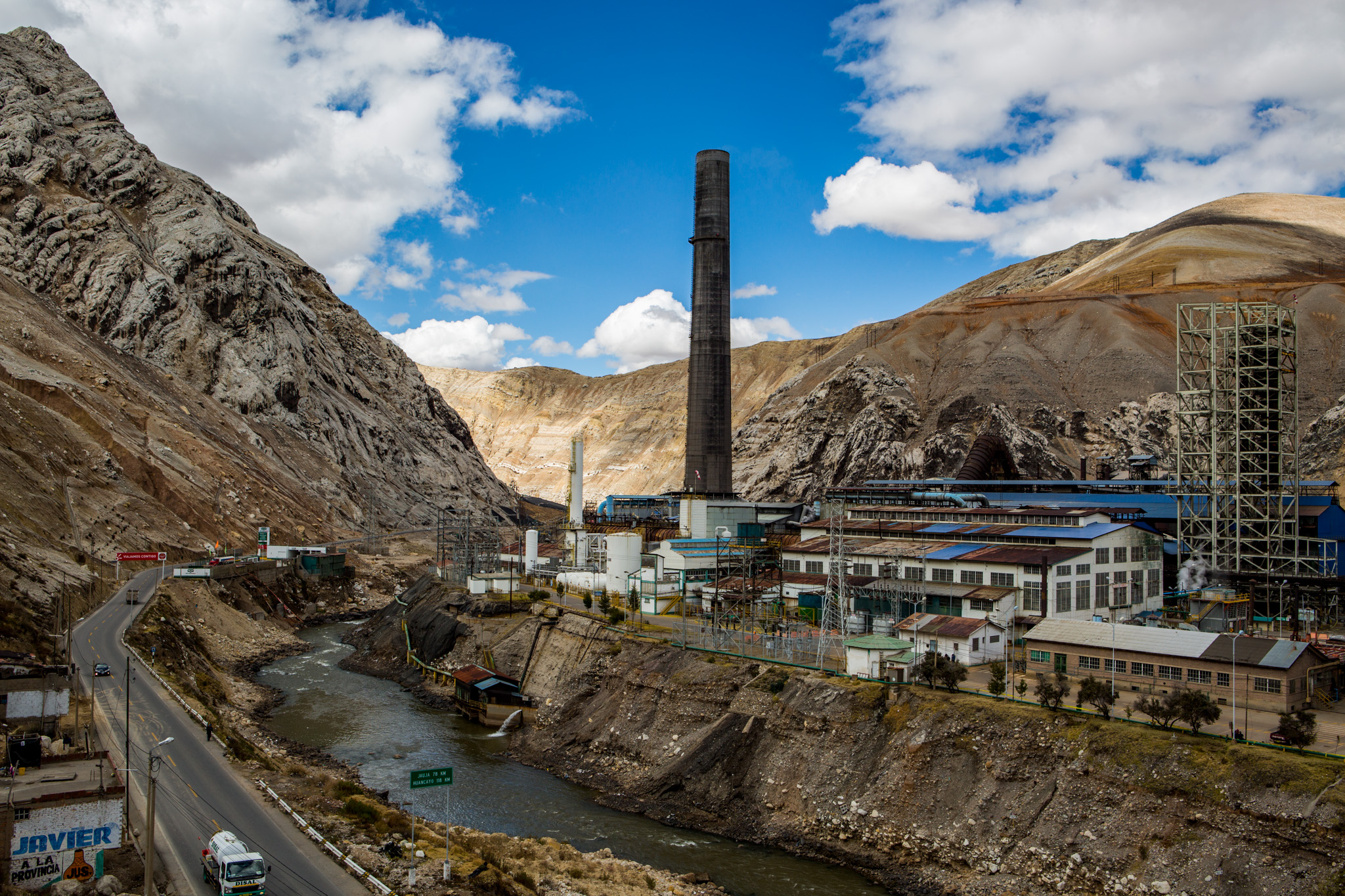
The smelting that virtually killed a city in the Andes, and poisoned its people. And the people want it open again, even as the pope speaks out against such environmental oppression. Photo by Jason Houstin
I had the great pleasure to work with mongabay.com editor Glenn Scherer on this important story, that is as comprehensive as it is sad and vexing. As Glenn wrote in the subhead: “Big business and labor in one of the world’s most Catholic nations wrestle with the economic implications of Pope Francis’ revolutionary encyclical on the environment.”
The link to the story is here.