Triad Next: Triad builds framework that suits creative class

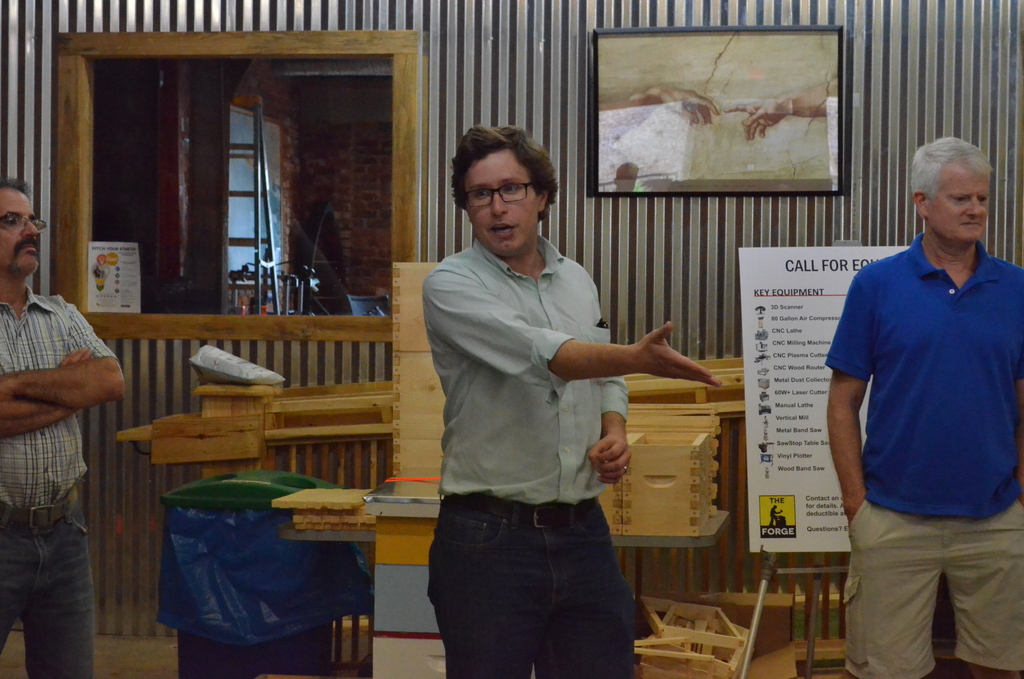
Joey Adams, 33, a Greensboro software developer, is co-founder of The Forge, a makerspace in downtown Greensboro.

Joey Adams, 33, a Greensboro software developer, is co-founder of The Forge, a makerspace in downtown Greensboro.

When I was executive editor of the Triad Business Journal from 1998 to 2011, I wrote a weekly front-page column titled Triad Talk. After a three-year hiatus, Editor Mark Sutter agreed to my idea to return as a monthly columnist with a new name, Triad Next. The first column on the Triad’s growing support for young, creative professionals ran on Aug. 29, 2014. It’s behind a paywall for 30 days. But you can see it on Medium.com before then.

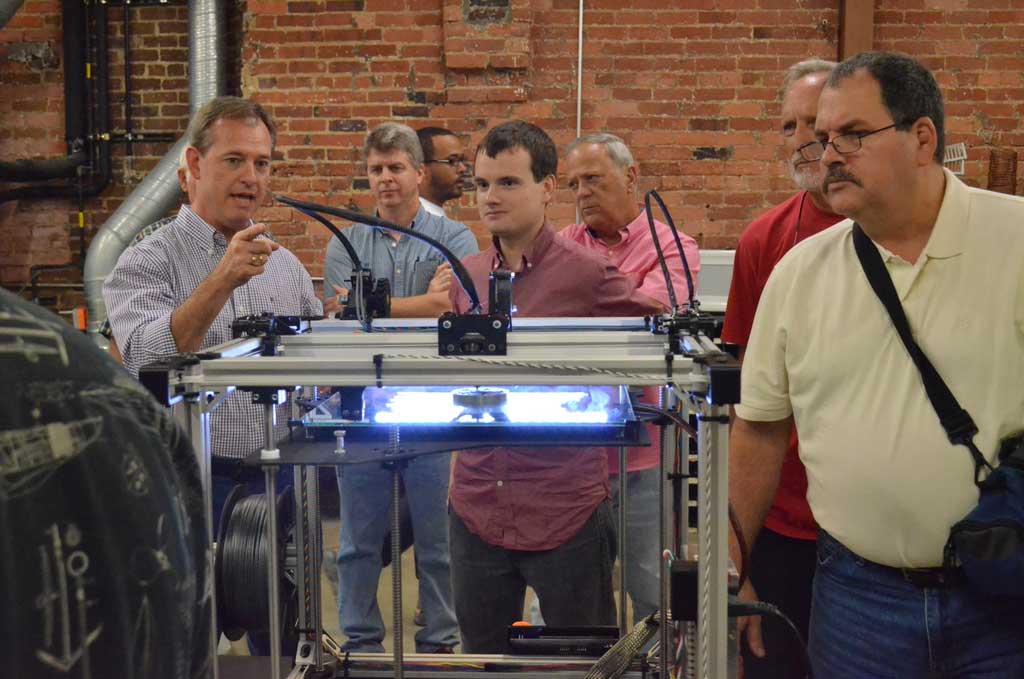
Excerpt:  Take downtown apartments and ballparks, coffee shops, microbreweries, art hops,food trucks, live theater and bike paths. Add in idea slams, accelerator labs, collaborative office space, entrepreneurial meetups and business incubators. That’s when the perception shifts. That’s when you hear something like this: “I see no reason why I can’t build my company here,” says Chris Padgett, 26, founder of Fusion 3 Design, a 6-month-old 3D-printer manufacturer in east Greensboro. “It’s places like this that make me optimistic.”

Photo by Justin Catanoso

Sun and Wind Alter Global Landscape, Leaving Utilities Behind

 New wind turbines in the North Sea off Germany. Renewable resources account for 30 perent of Germany’s power generation, more than twice what the U.S. produces. Photo: NY Times.

Justin Gillis, the New York Times’ climate change reporter, writes: “Of all the developed nations, few have pushed harder than Germany to find a solution to global warming. And towering symbols of that drive are appearing in the middle of the North Sea.” The Sept. 13, 2014 story is here.

Excerpt: Electric utility executives all over the world are watching nervously as technologies they once dismissed as irrelevant begin to threaten their long-established business plans. Fights are erupting across the United States over the future rules for renewable power. Many poor countries, once intent on building coal-fired power plants to bring electricity to their people, are discussing whether they might leapfrog the fossil age and build clean grids from the outset.


The power of journals: Reliving the Lewis and Clark expedition

Lewis & Clark statue

I wrote in September 2014 about two of my favorite characters from history — explorers Lewis and Clark — and a thing we have in common: keeping journals.  Here’s the link.

Excerpt: “I must admit that I’m as captivated by Lewis’ pen strokes as his paddle strokes. He was and remains the ultimate journalist, producing vivid descriptions of everything from the wingspan of a white pelican to the psychological and physical condition of his men (“. . . many of them have feet so mangled and bruised with the stones and rough ground . . . that they can hardly walk or stand . . . still they remain perfectly cheerful”). His language is elegant and precise — sharp as a photograph and just as telling.”

Peru’s first-ever high-resolution carbon map could help the world breathe easier

To put an accurate price on carbon, you need to know how much you have and where it’s located, researchers say. Stanford University scientists have produced the first-ever high-resolution carbon geography of Peru, a country whose tropical forests are among the world’s most vital in terms of mitigating the global impact of climate change. Click here for the whole story at National Geographic NewsWatch.

Photo courtesy Greg Asner

Triad building infrastructure for creative class

The Forge

In this business report on WFDD, I talk about the ongoing battle to attract and retain  young professionals in the Triad, based on my August 2014  column in the Triad Business Journal. “The Triad has made a lot of progress over the last several years to the point of supporting the growth of the creative class, including those in design, technology, communication and the arts,” I told WFDD’s Keri Brown.

Click here to listen to the radio report

“If not me, who?” At 80, Jim Melvin still building a legacy

Jim Melvin

My first interview with Jim Melvin was in 1988 when I was a young reporter in Winston-Salem for the News & Record of Greensboro. I’ve interviewed him scores of times since. In this most recent interview, he discusses the biggest economic development project he’s ever chased, and — to the delight of advocates and the dismay of critics — makes it clear he has no intention of retiring any time soon.

Excerpt:  Eighty years old. A bronze statue. His name long affixed to City Hall. A list of accomplishments, as well as legions of admirers and critics, that could fill his beloved ballpark. All this might suggest that the end of the road for Melvin as a community leader is in sight.

It’s not. He says he can’t imagine anything worse than getting up in the morning and not having something important to do. He says there is no succession plan at the Joseph M. Bryan Foundation. He says he has no immediate plans to retire.

“Like Mr. Bryan (who retired at 97), I’ll know when it’s time,” he says . Click here for the story.

Photo by Julie Knight

Witnessing a young Pope John Paul II’s passion

While having lunch last spring with good friend David Ford of WFDD, I told him about the time my wife and I — during our honeymoon in 1984 — witnessed the charismatic aura of Pope John Paul II while visiting the Vatican. Ford liked the story so much that we headed straight back to the studio to record it, unscripted. It aired right around the time of the former pope’s canonization. You can hear the recording here.

AOL Travel: Popes John Paul II, John XXIII: A Saint’s Cousin on Being a Pilgrim in St. Peter’s Square for a Canonization

ITALY-VATICAN-CANONIZATION

On the occasion of Pope Francis canonizing two of his beloved predecessors in April 2014, Zach Everson at AOL Travel asked if I would write about story about the spectacle of canonization in Rome from the perspective of someone who had a good reason in 2005 to attend one. I was glad to do it. The story is here.

Excerpt: “On that memorable day, my family and I –- more than 60 of us from America, each of us bursting with pride –- crowded into St. Peter’s Square for what was Benedict’s first canonization ceremony. Rome goes crazy for these events. Stores and restaurants, not to mention buses and cars, are festooned with posters of the saints-to-be. Everywhere we looked in the vicinity of the Vatican, we saw our family name and cousin’s gentle smile. We felt like special guests at a giddy global block party.”

Eden fights to set the record straight on coal ash spill

Dan River behind the spill

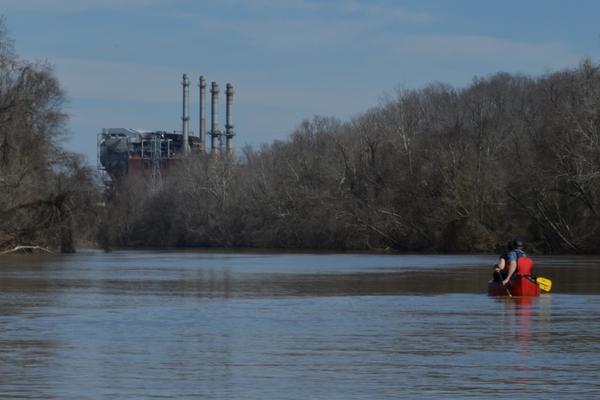
The Dan River in Eden, N.C., just above the Duke Energy plant and site of one of the nation’s worst coal-ash spills.

After 39,000 tons of toxic coal ash rom Duke Energy retention ponds spilled into the Dan River just outside Eden, N.C., in early February 2014, the news coverage by local, state and national media was intense. I wrote early on about the environmental impact, too, but saw a larger business story. Two-thirds of the Dan River was unaffected by the spill, yet the communities, and businesses, along that still-clean stretch of the river couldn’t be heard above the outcry over the massive spill. My cover story in the Triad Business Journal explores that angle.

Excerpt: “Add this irony for Eden and a host of Dan River communities west — upstream — of the spill: Their Dan River has no coal ash. It is just as clean and safe as in the days before the massive spill. That simple point has been lost in the great deluge of ongoing media coverage. Eden and Rockingham County have perhaps never gotten so much sustained national attention. Virtually all of it negative. Water, and coal ash, flow downstream. But a toxic perception has flowed in both directions.”
Brian Williams, Dan River Steam plant, coal ash spill, Duke Energy, Eden

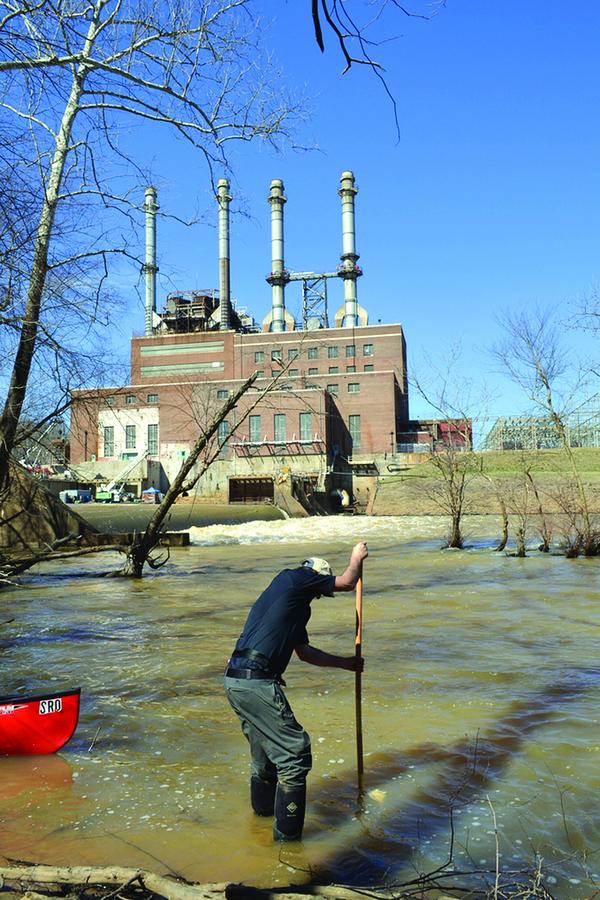
Brian Williams, a program manager with the Dan River Basin Association, dredges the river bottom across from the Duke Energy steam plant.

Unlined and Dangerous: Duke Energy’s 32 coal ash ponds in North Carolina pose a threat to groundwater

coal ash spill

Coal ash pulled from the bottom of the Dan River near the site of the Duke Energy spill in Eden, N.C. (Photo courtesy of Dan River Basin Association)

I posted this story to the National Geographic NewsWatch site in March 2014, just a month after the Duke Energy coal-ash spill in Eden, N.C., It made clear early on that coal ash stored in retaining ponds across the state was already threatening ground water in those places. The story caught on through social media and found thousands of readers.

Excerpt: “These coal ash ponds are unlined, and people don’t realize that,” said Dean Naujoks, the Yadkin Riverkeeper who has been monitoring the Dan River spill. “They are continuously leaching arsenic, chromium, cadmium, mercury, all kinds of toxic heavy metals, into the ground and eventually into groundwater. Duke Energy has 32 of these ponds on 14 sites around the state, and every one of them is unlined. Every one of them is a threat to groundwater.”