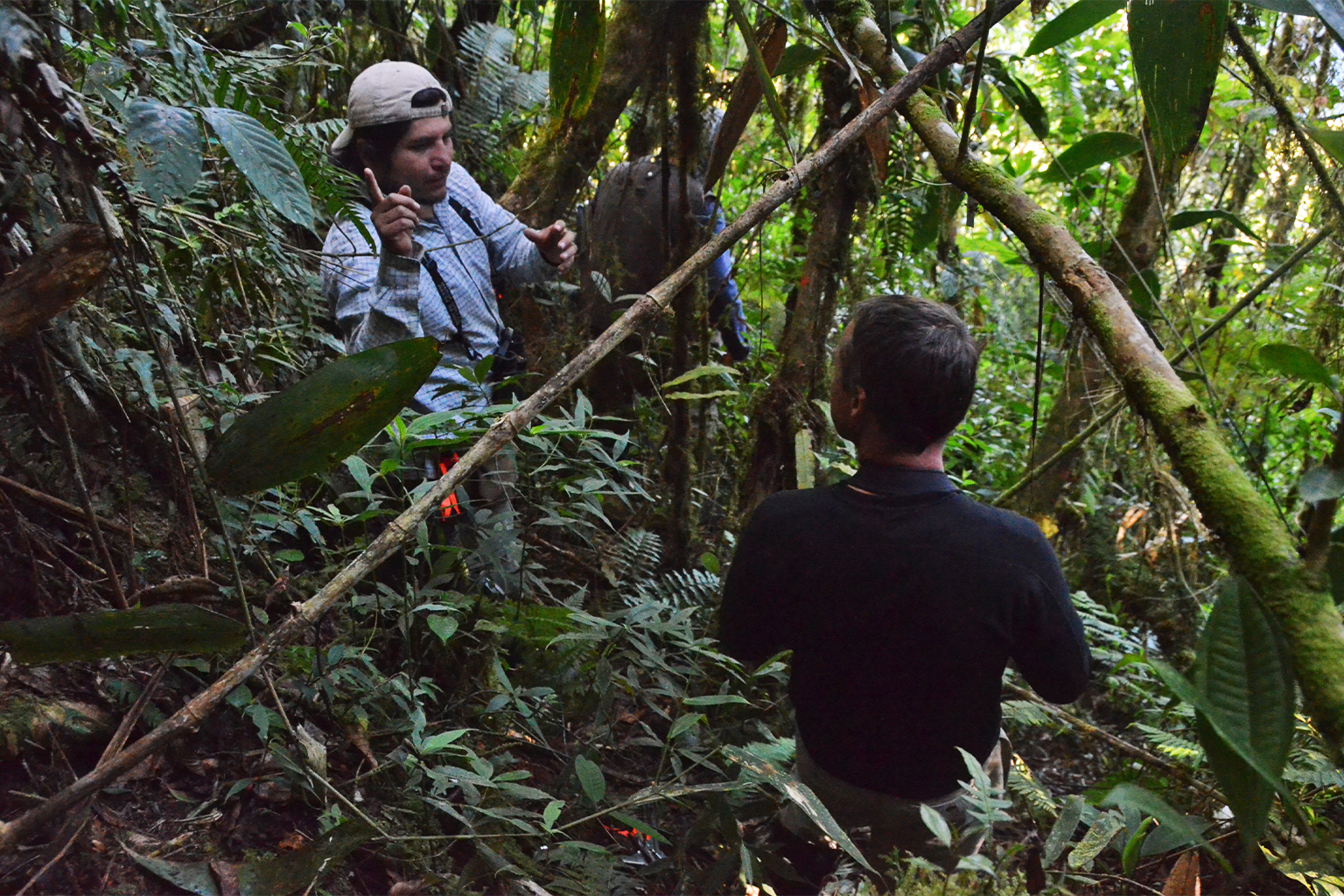
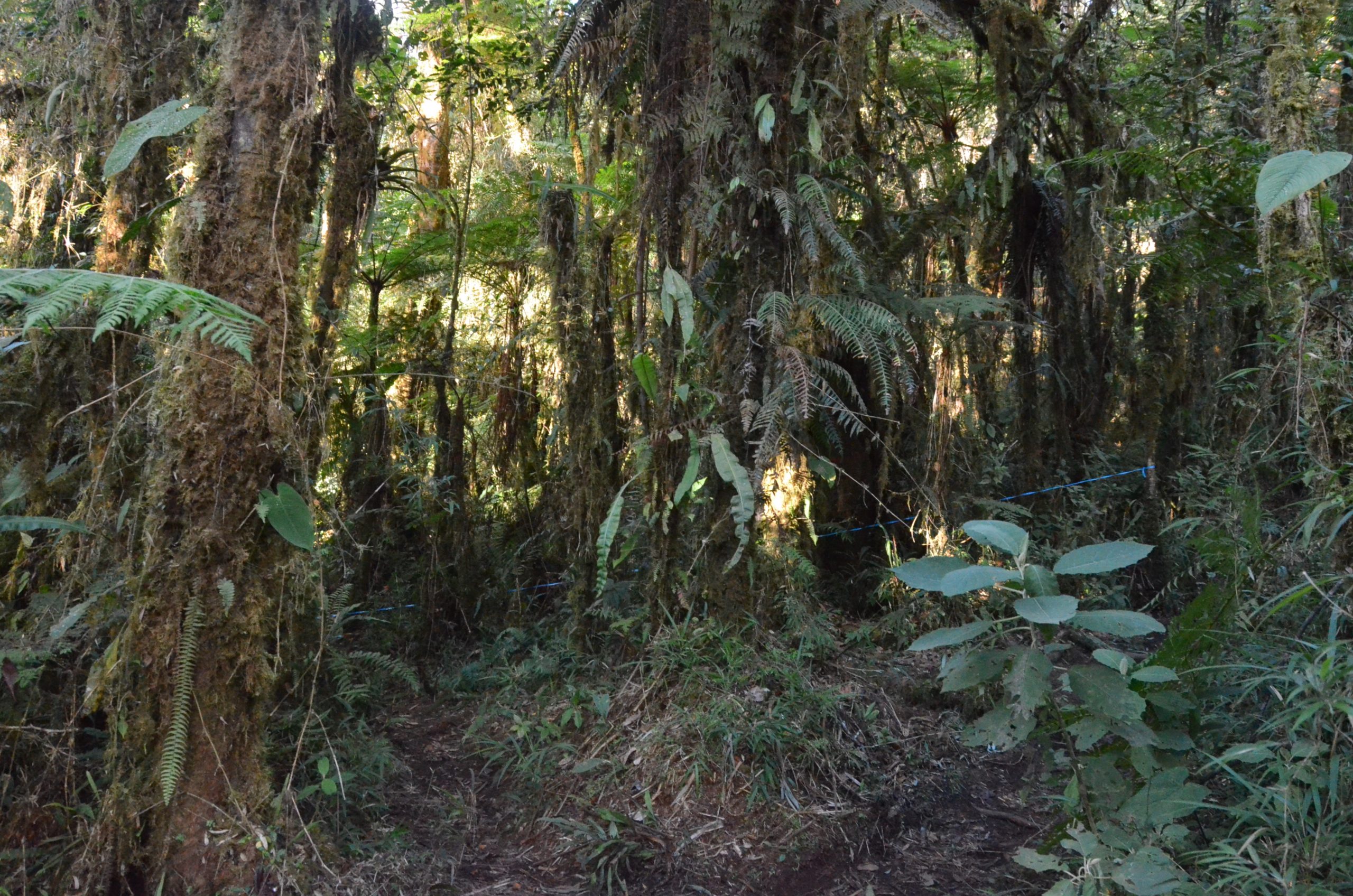
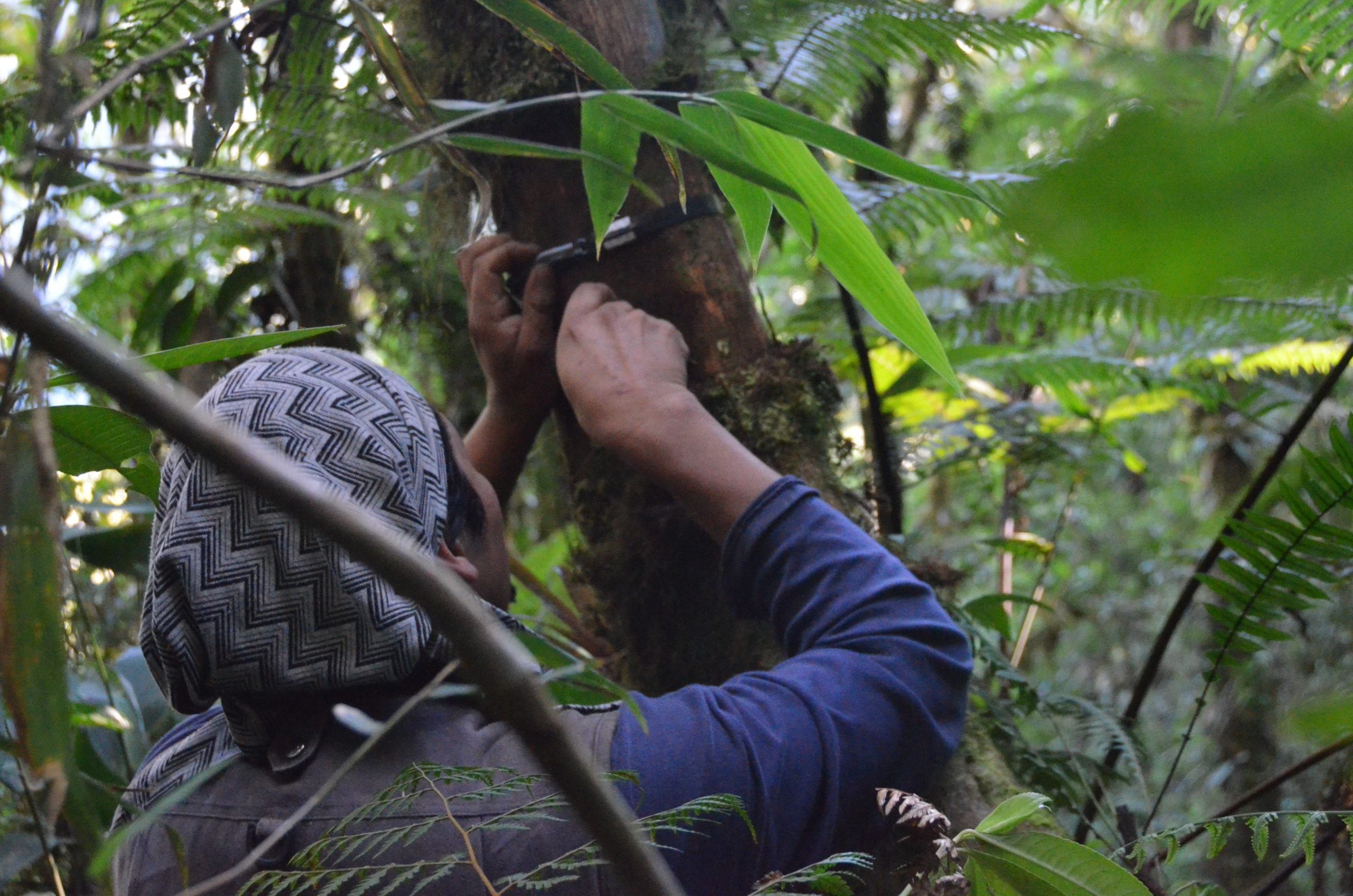
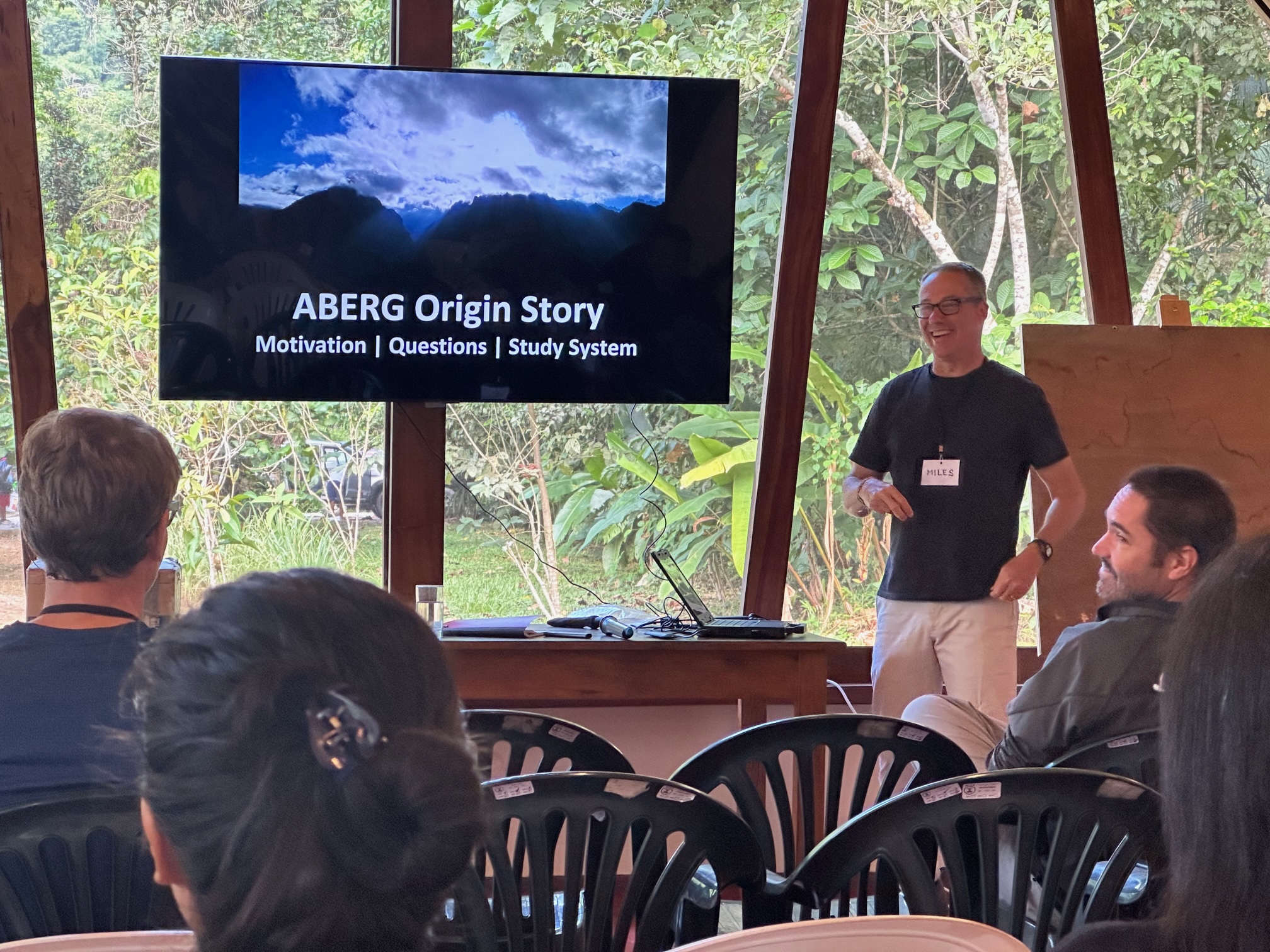
Tropical ecologists Willian Farfan Rios and Miles Silman with the Andes Biological and Ecosystem Research Group gather data on tree species migration in a field plot at 1,500 meters (5,000 feet) on the elevational transect in the Kosñipata Valley in the Peruvian Amazon. Image by Justin Catanoso.
In this story, I return to the theme and focus of my very first environmental reporting in summer 2013 in the southern Peruvian Amazon — how climate change-driven warming in the tropics is driving upslope species migration. It was a concept that largely baffled me when I first encountered it. But the years since, I’ve come to understand and appreciate it in depth and historical context.
Thus, when his new, exhaustive and pioneering research was brought to my attention, I immediately pitched a story idea to my editor, Glenn Scherer, who just as quickly grasped the importance of the researchers’ findings.
Here’s the essence: In the tropics, vast lowlands can require species to move large distances north or south to escape warming. The most rapid path to climate-resilience is upslope migration, with plants and animals relocating shorter distances uphill to cooler places. A new study has mapped major elevational gradients in the Amazon that offer the best possibility for connectivity and upslope relocation in the biome — overlaying elevational gradients, amount of forest cover, fragmentation and protected areas.
With the except of the primate photo, I took all the photos that accompany the story during my repeated visits to the Peruvian Amazon since my first reporting trip there in 2013.
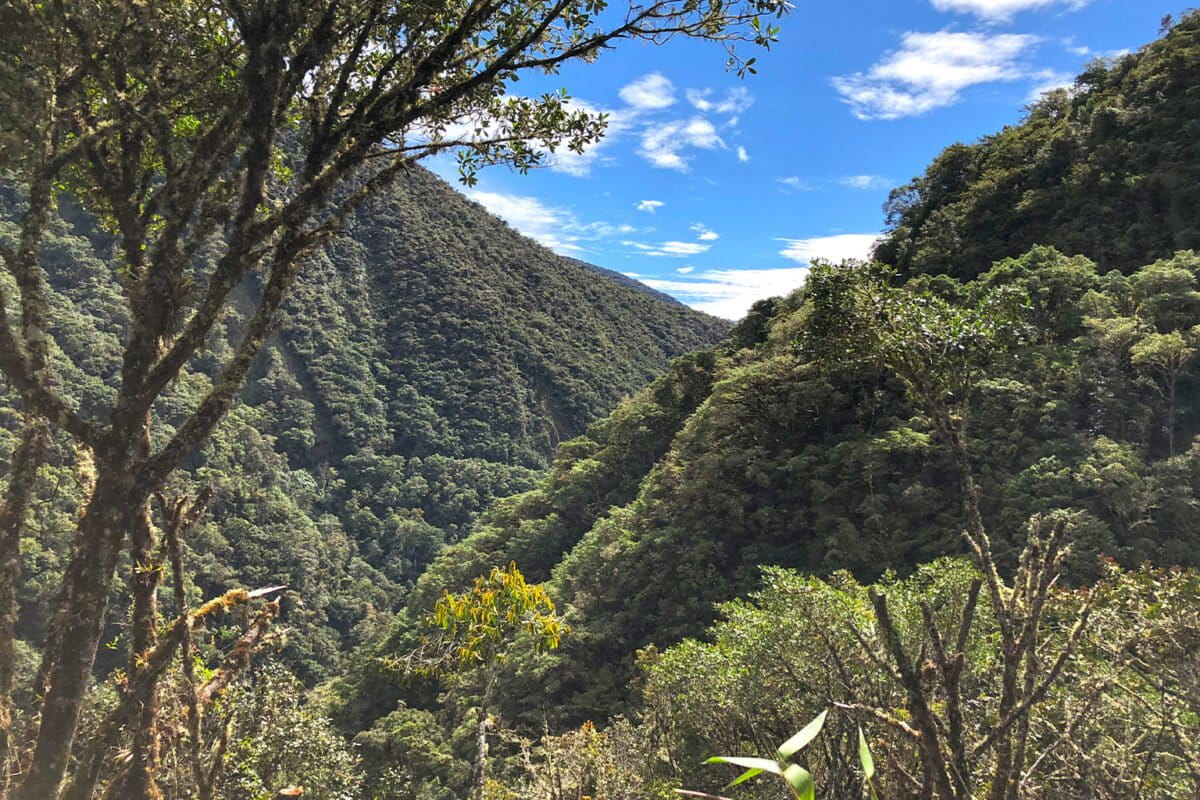
Densely forested slopes of the Peruvian Amazon in Manu National Park offer what scientists believe are pathways to climate resilience and species survival as warming temperatures across the South American tropics force many plant and animal species to migrate to cooler temperatures to remain in their ecological equilibrium. Image by Justin Catanoso.
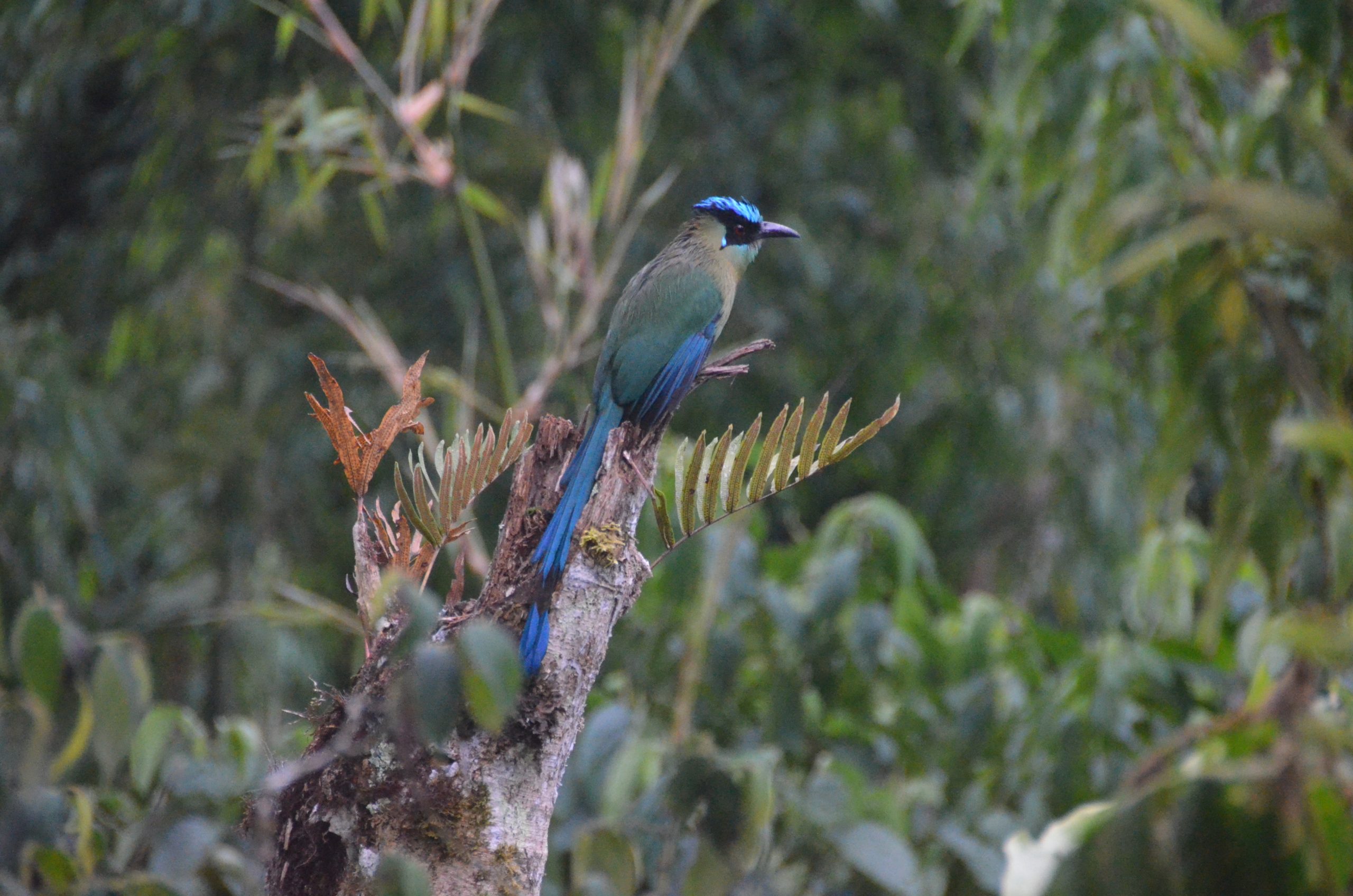
I distinctly remember taking this photo from the lodge at San Pedro in the Kosnipata Valley of the southern Peruvian Amazon in July 2013. I had never photographed a more spectacular-looking bird. And it was on my first trip to Peru, a guest a Miles Silman, a professor of tropical ecology at Wake Forest and co-founder of the Andes Biodiversity and Ecosystem Research Group (ABERG).
This story about the 20th anniversary meeting of a pioneering tropical research coalition came about for two reasons: 1) my first grandchild, Simon Catanoso, made his entrance into the world more an a week before his due date, thus opening the way for me to head to Peru, and 2) the 10th anniversary of the Andes Biodiversity and Ecosystem Research Group (ABERG) was the start of a new journalistic career path for me — climate change and climate policy — that ultimately led me to Mongabay.
A Spanish language version of the story, published on Mongabay LATAM, is here.
Since my first trip to Peru in 2013 at the insistence of my Wake ForestUniversity colleague and collaborator Miles Silman, a top tropical ecologist and co-founder of ABERG, I’ve returned nearly a dozen times. Once to cover COP20 in 2014, the UN climate summit that set the stage for the 2015 Paris Agreement, which I covered for Mongabay, with funding support from the The Andrew Sabin Family Center for Environment and Sustainability at Wake Forest. Later, I returned multiple times as a communications consultant from Wake Forest for an influential NGO, CINCIA in Puerto Maldonado, founded in part by Miles with grants from USAID and World Wildlife Fund. In 2018, Miles and I developed a four-week summer program in tropical ecology and science writing and have brought four groups of Wake Forest students to the Amazon since then. Wake Forest featured our program online and in print.
Along the way, I’ve climbed a learning curve in climate science, forest and ecosystem mechanics, and biodiversity necessity that has enabled a late-career pivot to environmental journalism, mostly for Mongabay. I simply could not have imagined such a dramatic career change when I left newspaper journalism in 2011. I am beyond grateful to Miles and host of environmental scientists, NGOs and forest campaigners over the past decade for assisting me in my immersion into covering parts of the most important story on earth, bar none — the existential threat to human life on earth wrought by human-induced climate change.
At ABERG10, held in the Andean village of Pisac, not from from Cuzco, I knew so little about the science and the issues I was reluctant to interview the amazing tropical ecologists from around the world who gathered for that meeting, even though I was the only journalist there. Still, my coverage of ABERG10 was published in National Geographic Online, as well as in radio stories in WUNC and WFDD in North Carolina.
Ten years later, at ABERG20, many of those same scientists have become trusted sources, the issues they discussed and findings they presented are now familiar, and the context of complexity in their data gathering is something I’ve witnessed myself many times. The lead investigators and graduate students who make up ABERG are contributing to one of the most unique and vital longitudinal research projects in the global tropics across a range of topics.
My goal with the story here was to capture the essence of ABERG, its amazing transect, and its overlapping studies while highlighting a few of the scientists whose devotion to understanding the impact of warming temperatures on a warm and globally vital ecosystem remains strong and growing stronger.
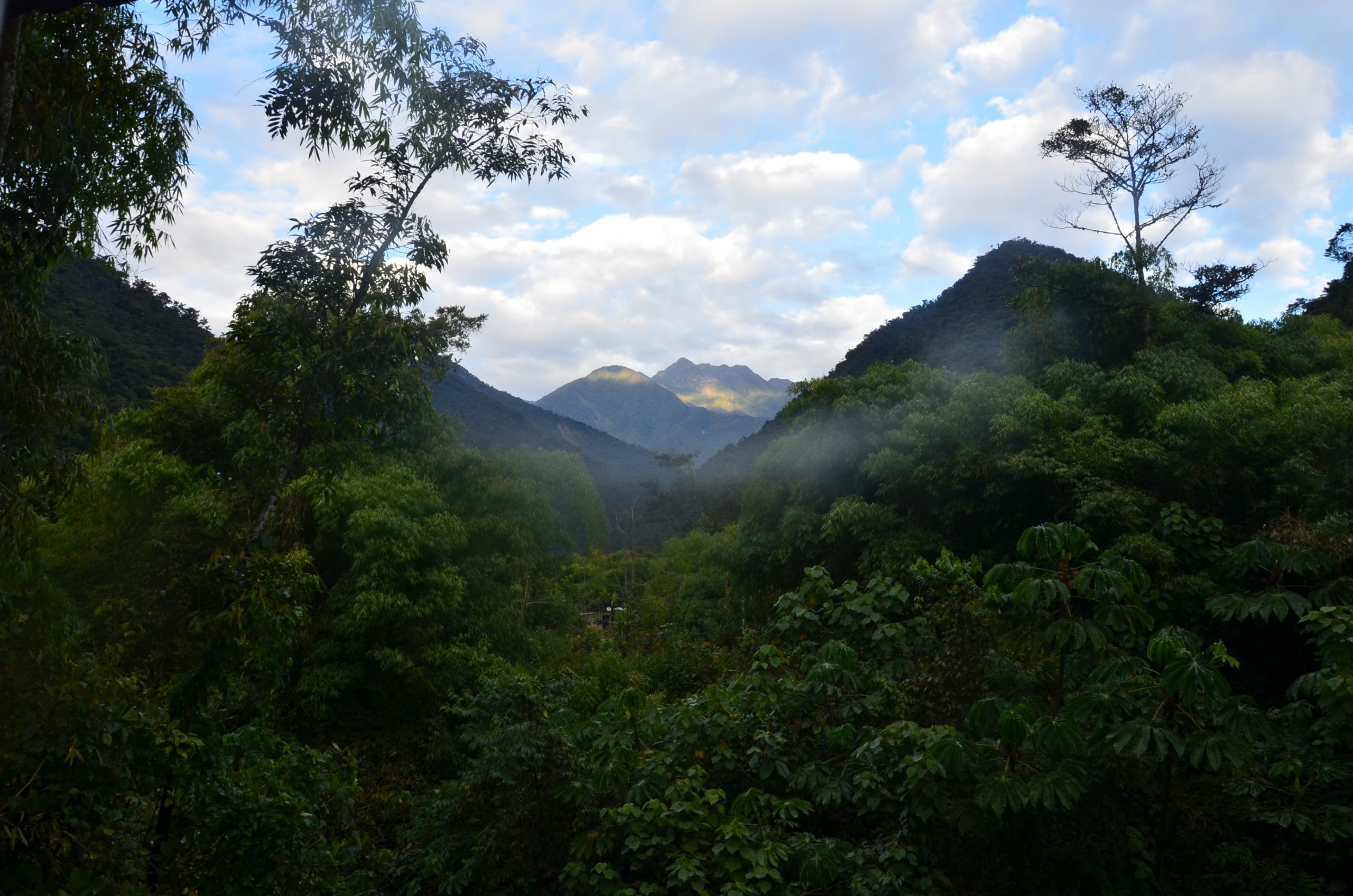
ABERG’s study field for more than 20 years, off in the distance. My photo from 2013.
In my story, I describe the unique transect that Miles planned and oversaw the installation of starting in 2003 — more than 20 1-hectare plots on a single slope of the Andes stretching down from 12,000 feet to lowlands near sea level. This 2013 photo of mine accurately captures the ruggedness of each plot. What you can’t see is just how difficult these plots are to access, located as they are on a single, rough trail carved by Incans more than 500 years ago and used only by scientists and cocoa smugglers.
What the meticulous work of evaluating the impact of climate change on 1255 tree species along the transect looks like. My photo from 2013.
Miles Silman, ABERG co-founder and architect of the elevational gradient/transect, organized ABERG20 and opened the conference with a brief history of the group’s origins and aspirations. My photo from June 2023.