
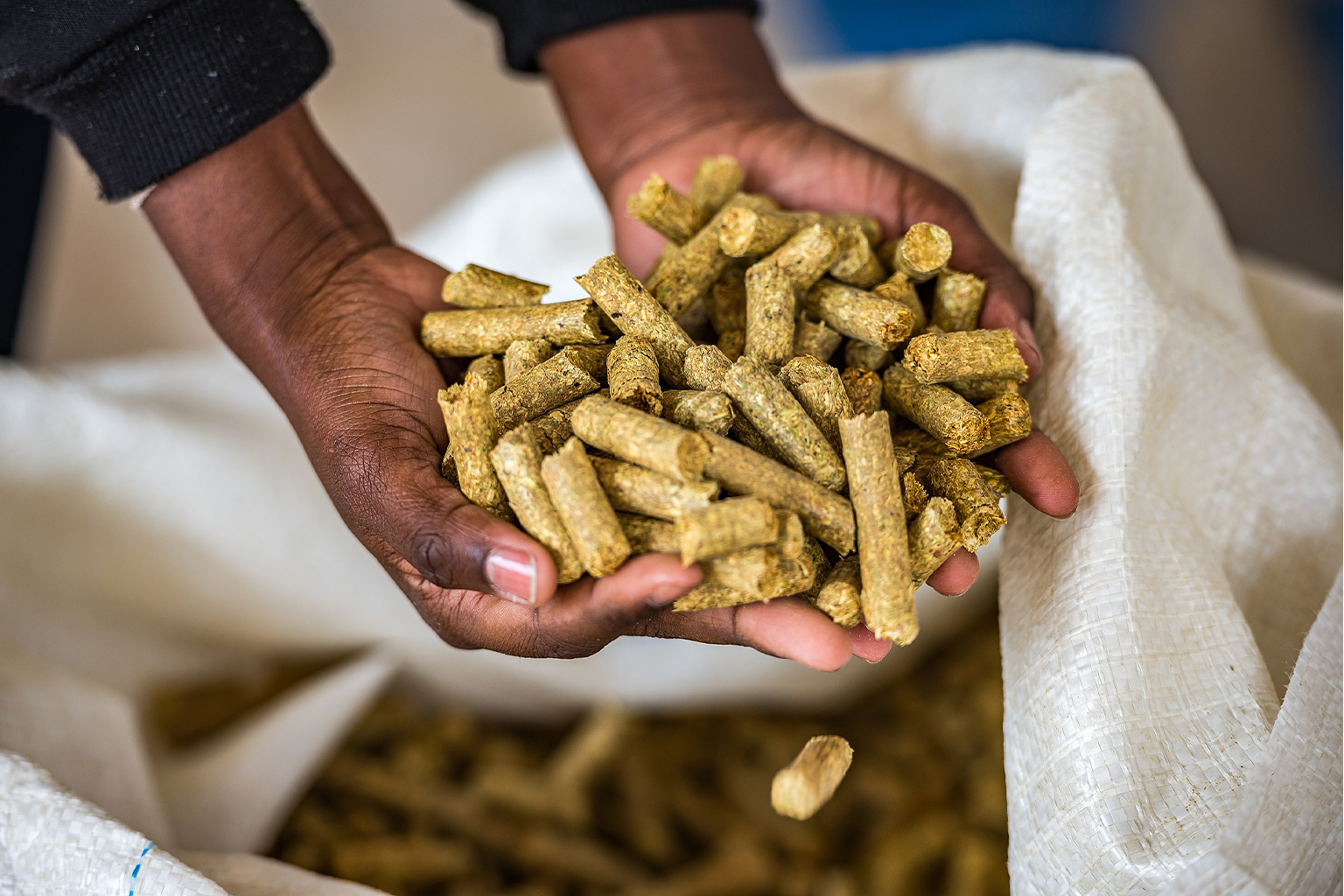
Research shows that “biomass burning power plants emit 150% the CO2 of coal, and 300-400% the CO2 of natural gas, per unit energy produced.” Image by GIZ Bush Control and Biomass Utilisation Project via Wikimedia Commons (CC BY-SA 4.0).
My first story for Mongabay in 2026 is among the more important stories I’ve written in recent years on the forest biomass beat. Forest advocates across the EU have had little success in pushing back against the expanding use of forest biomass — wood pellets — for industrial-scale energy generation and the billions in state subsidies paid to support the industry.
In what appears to be an unprecedented development, law enforcement in the Netherlands is weighing whether to launch a criminal investigation against RWE, one of the largest energy providers in the Netherlands, and a significant importer of wood pellets from Asia, the U.S. and Eastern Europe. Forest advocates Comite Schone Lucht and Biofuelwatch alleged that RWE has misrepresented what its imported wood pellets from Malaysia are made out of in order to receive lucrative Dutch subsidies. RWE says it supports and abides by Dutch and EU certification schemes.
Such certification has been designed to ensure that imported wood pellets are not contributing to deforestation where they are produced. Forest advocates argue that the certification process is imprecise and unreliable. Now, Dutch law enforcement agencies will determine whether to investigate to see if corporate fraud is involved.